Författare
Ada Nifosi
Ada Nifosi är en uppskattad författare inom Skönlitteratur med totalt 1 bok tillgängliga på Bokkollen.
Bland verken finns Maidenhood in the Greco-Roman World, som toppar listan över Ada Nifosis populäraste böcker. Verken spänner över skönlitteratur och tilltalar läsare som uppskattar genren.
På Bokkollen gör vi det enkelt att navigera i Ada Nifosis författarskap. Vår databas uppdateras ständigt med nya släpp och format, så oavsett om du söker efter en lättläst pocket för semestern, en lyxig inbunden presentutgåva eller en digital ljudbok för pendlingen, har vi rätt utgåva för dig.
Jämför snabbt och smidigt priser på alla böcker av Ada Nifosi hos Sveriges ledande bokhandlare – som Adlibris, Bokus och Akademibokhandeln – och hitta alltid det bästa erbjudandet utan att betala för mycket.
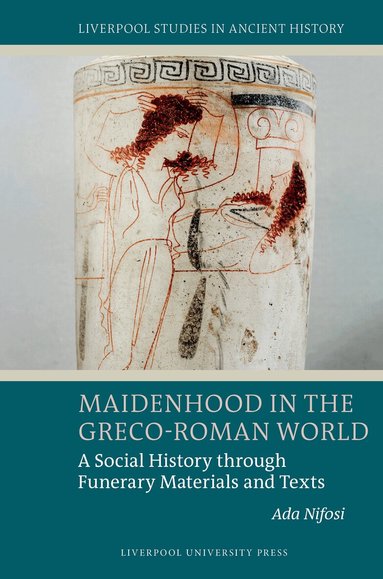
Maidenhood in the Greco-Roman World
Maidenhood in the Greco-Roman World offers the first comprehensive social history of maidenhood in the Graeco-Roman world, spanning the fifth century BC to the fourth century AD. Through an unprecedented comparative synthesis of archaeological case studies, epigraphic evidence, iconography, and literary sources, it explores how young women were perceived, commemorated, and socially constructed in death. At its core are forty-two carefully selected burial case studies from Greece, Italy, and Egypt. Rather than attempting an exhaustive catalogue, the book presents contextualised, well-excavated examples, combining analysis of grave goods, skeletal remains, and funerary assemblages with wider regional comparisons. These burials are read alongside funerary art, inscriptions, and ancient medical, legal, and literary texts to reconstruct the social meanings attached to maidenhood.The study argues that funerary contexts do not simply reveal the lives of girls, but the social gaze cast upon them, including expectations surrounding beauty, skills, piety, and marriage. By bringing together material and textual evidence across different regions and periods, the book highlights both shared traditions and local adaptations in commemorating girls who died before marriage.In doing so, it illuminates a crucial yet understudied transitional stage of life and demonstrates the centrality of maidenhood in Graeco-Roman social imagination.
Hela bibliografin
Utforska alla Ada Nifosis publicerade verk sorterade efter popularitet.
Upptäck liknande författare
Om du gillar Ada Nifosi kommer du förmodligen att uppskatta även dessa författare inom skönlitteratur.
Boktips inom skönlitteratur
Vårens gåtfulla läsning: Dan Browns nya thriller
Upptäck Dan Browns senaste thriller, en gåtfull vårsaga fylld av hemligheter och snabba vändningar.
Påskläsning – Liken vi begravde, en gåtfull berättelse
Upptäck den gåtfulla skönlitteraturen i Liken vi begravde – en påskläsning om död, minne och försoning som berör djupt.
Mörka aprilkvällar blir heta med Hembiträdets hemlighet
När aprilregnet smattrar mot rutan blir Hembiträdets hemlighet en het, gåtfull följeslagare som håller dig vaken hela natten.
Mellan blomsterdoft och stjärnljus – en vårbok
Upptäck Malin Haawinds poetiska debut där vårens blommor möter natthimlens klarhet. En bok som glimmar av hopp och stjärnljus.