Författare
Amanda Batarseh
Amanda Batarseh är en uppskattad författare inom Skönlitteratur med totalt 2 böcker tillgängliga på Bokkollen.
Bland verken finns Rooted Movements, som toppar listan över Amanda Batarsehs populäraste böcker. Verken spänner över skönlitteratur och tilltalar läsare som uppskattar genren.
Letar du efter något nytt att läsa? Prova Rooted Movements – ett annat uppskattat verk av Amanda Batarseh.
På Bokkollen gör vi det enkelt att navigera i Amanda Batarsehs författarskap. Vår databas uppdateras ständigt med nya släpp och format, så oavsett om du söker efter en lättläst pocket för semestern, en lyxig inbunden presentutgåva eller en digital ljudbok för pendlingen, har vi rätt utgåva för dig.
Jämför snabbt och smidigt priser på alla böcker av Amanda Batarseh hos Sveriges ledande bokhandlare – som Adlibris, Bokus och Akademibokhandeln – och hitta alltid det bästa erbjudandet utan att betala för mycket.
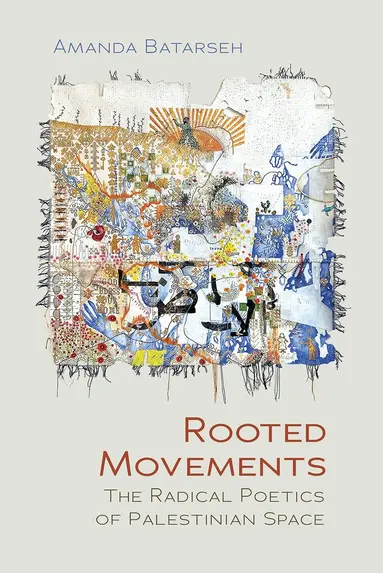
Rooted Movements
Present in the heart of modern Palestinian literature is a pervasive sense of rootedness, sustained and nurtured by a deep care for land stewardship and embedded in a spatialized history. In Rooted Movements, Amanda Batarseh examines the epistemology of Palestinian Indigeneity based in a radical relationship to place. Against a colonial logic that often centers displacement as the chief lens through which to understand Palestinian connection to place and spatialized existence, Batarseh argues that Palestinian literature poses Indigeneity as a dialectic relying as much upon rootedness as on ideas of movement. In elaborating this tension, Batarseh develops a methodology of reading Palestinian literature that foregrounds how Palestinians negotiate space and removal through liberatory mobilization and not as a symptom of zionist, colonial violence. Reading the poetry, creative nonfiction, essays, novels, and films of writers in Palestine and in exile-from Ghassan Kanafani to Naomi Shihab Nye, Hussein Barghouthi, Raja Shehadeh, Ibtisam Azem, and Randa Jarrar-she exposes the limitations of focusing on the geopolitical borders of a modern nation-state and offers alternative imaginaries not bound by colonial spatial control. Instead, the Palestinian poetics of space Batarseh articulates engage rooted movement as an Indigenous expression of deep-seated and enduring connections to place. Palestine, this place, is not static, enclosed by military boundaries, or frozen in time before or after the Nakba, but generative and looking toward a Palestinian future.
Hela bibliografin
Utforska alla Amanda Batarsehs publicerade verk sorterade efter popularitet.
Upptäck liknande författare
Om du gillar Amanda Batarseh kommer du förmodligen att uppskatta även dessa författare inom skönlitteratur.
Boktips inom skönlitteratur
Vårens gåtfulla läsning: Dan Browns nya thriller
Upptäck Dan Browns senaste thriller, en gåtfull vårsaga fylld av hemligheter och snabba vändningar.
Påskläsning – Liken vi begravde, en gåtfull berättelse
Upptäck den gåtfulla skönlitteraturen i Liken vi begravde – en påskläsning om död, minne och försoning som berör djupt.
Mörka aprilkvällar blir heta med Hembiträdets hemlighet
När aprilregnet smattrar mot rutan blir Hembiträdets hemlighet en het, gåtfull följeslagare som håller dig vaken hela natten.
Mellan blomsterdoft och stjärnljus – en vårbok
Upptäck Malin Haawinds poetiska debut där vårens blommor möter natthimlens klarhet. En bok som glimmar av hopp och stjärnljus.