Författare
Asko Nivala
Asko Nivala är en uppskattad författare inom Skönlitteratur med totalt 1 bok tillgängliga på Bokkollen.
Bland verken finns Artificial Intelligence before Computers, som toppar listan över Asko Nivalas populäraste böcker. Verken spänner över skönlitteratur och tilltalar läsare som uppskattar genren.
På Bokkollen gör vi det enkelt att navigera i Asko Nivalas författarskap. Vår databas uppdateras ständigt med nya släpp och format, så oavsett om du söker efter en lättläst pocket för semestern, en lyxig inbunden presentutgåva eller en digital ljudbok för pendlingen, har vi rätt utgåva för dig.
Jämför snabbt och smidigt priser på alla böcker av Asko Nivala hos Sveriges ledande bokhandlare – som Adlibris, Bokus och Akademibokhandeln – och hitta alltid det bästa erbjudandet utan att betala för mycket.
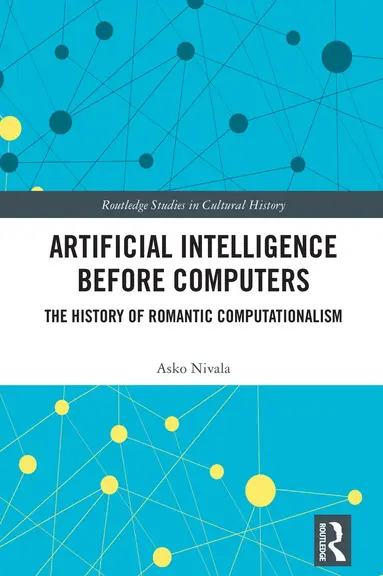
Artificial Intelligence before Computers
This cultural history of thinking machines examines conceptions of the human as an automaton and the possibility of mechanised thought in philosophical and literary works from the seventeenth century to the 1840s, with particular emphasis on the Romantic period.In the 2020s, there has been no escaping the debate over AI. Yet strong AI remains as much science fiction today as it was in the nineteenth century. Media archaeology has highlighted the ruptures and dead ends of technological development, recovering forgotten and obsolete technologies. Failed and imagined attempts to create thinking machines from Thomas Hobbes to Charles Babbage and from E.T.A. Hoffmann to Edgar Allan Poe not only illuminate their own historical contexts but also reveal the origins of the utopian hopes and dystopian fears that continue to shape responses to mechanised thought. Artificial Intelligence before Computers argues that we can move beyond the Romantic myth of AI only by recognising its historical roots.Drawing on case studies from Britain, Germany and the United States, this book will appeal to postgraduates and scholars in history, philosophy, literary studies and media studies, as well as non-specialist readers seeking to understand the long history of AI.
Hela bibliografin
Utforska alla Asko Nivalas publicerade verk sorterade efter popularitet.
Upptäck liknande författare
Om du gillar Asko Nivala kommer du förmodligen att uppskatta även dessa författare inom skönlitteratur.
Boktips inom skönlitteratur
Vårens gåtfulla läsning: Dan Browns nya thriller
Upptäck Dan Browns senaste thriller, en gåtfull vårsaga fylld av hemligheter och snabba vändningar.
Påskläsning – Liken vi begravde, en gåtfull berättelse
Upptäck den gåtfulla skönlitteraturen i Liken vi begravde – en påskläsning om död, minne och försoning som berör djupt.
Mörka aprilkvällar blir heta med Hembiträdets hemlighet
När aprilregnet smattrar mot rutan blir Hembiträdets hemlighet en het, gåtfull följeslagare som håller dig vaken hela natten.
Mellan blomsterdoft och stjärnljus – en vårbok
Upptäck Malin Haawinds poetiska debut där vårens blommor möter natthimlens klarhet. En bok som glimmar av hopp och stjärnljus.