Författare
Bissera V. Pentcheva
Bissera V. Pentcheva är en uppskattad författare inom Kultur och Filosofi och religion med totalt 2 böcker tillgängliga på Bokkollen.
Bland verken finns Sensual Icon, som toppar listan över Bissera V. Pentchevas populäraste böcker. Verken spänner över kultur och tilltalar läsare som uppskattar genren.
Letar du efter något nytt att läsa? Prova Hagia Sophia – ett annat uppskattat verk av Bissera V. Pentcheva.
På Bokkollen gör vi det enkelt att navigera i Bissera V. Pentchevas författarskap. Vår databas uppdateras ständigt med nya släpp och format, så oavsett om du söker efter en lättläst pocket för semestern, en lyxig inbunden presentutgåva eller en digital ljudbok för pendlingen, har vi rätt utgåva för dig.
Jämför snabbt och smidigt priser på alla böcker av Bissera V. Pentcheva hos Sveriges ledande bokhandlare – som Adlibris, Bokus och Akademibokhandeln – och hitta alltid det bästa erbjudandet utan att betala för mycket.
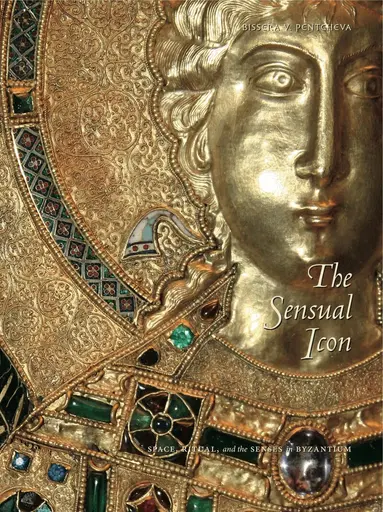
Sensual Icon
Today we take the word "icon" to mean "a sign," or we equate it with portraits of Christ and the saints. In The Sensual Icon, Bissera Pentcheva demonstrates how icons originally manifested the presence of the Holy Spirit in matter. Christ was the ideal icon, emerging through the Incarnation; so, too, were the bodies of the stylites (column-saints) penetrated by the divine pneuma (breath or spirit), or the Eucharist, or the Justinianic space of Hagia Sophia filled with the reverberations of chants and the smoke of incense. Iconoclasm (726-843) challenged these Spirit-centered definitions of the icon, eventually restricting the word to mean only the lifeless imprint (typos) of Christ's visual characteristics on matter. By the tenth century, mixed-media relief icons in gold, repoussé, enamel, and filigree offered a new paradigm. The sun's rays or flickering candlelight, stirred by drafts of air and human breath, animated the rich surfaces of these objects; changing shadows endowed their eyes with life. The Byzantines called this spectacle of polymorphous appearance poikilia, that is, presence effects sensually experienced. These icons enabled viewers in Constantinople to detect animation in phenomenal changes rather than in pictorial or sculptural naturalism. "Liveliness," as the goal of the Byzantine mixed-media relief icon, thus challenges the Renaissance ideal of "lifelikeness," which dominated the Western artistic tradition before the arrival of the modern. Through a close examination of works of art and primary texts and language associated with these objects, and through her new photographs and film capturing their changing appearances, Pentcheva uncovers the icons' power to transform the viewer from observer to participant, communing with the divine.
Hela bibliografin
Utforska alla Bissera V. Pentchevas publicerade verk sorterade efter popularitet.
Upptäck liknande författare
Om du gillar Bissera V. Pentcheva kommer du förmodligen att uppskatta även dessa författare inom kultur.