Författare
Brett Christophers
Brett Christophers är en uppskattad författare inom Ekonomi och Ledarskap och Samhälle och politik med totalt 8 böcker tillgängliga på Bokkollen, utgivna hos Verso Books, John Wiley and Sons Ltd.
Bland verken finns Our Lives in Their Portfolios, som toppar listan över Brett Christopherss populäraste böcker. Verken spänner över ekonomi & ledarskap och tilltalar läsare som uppskattar genren.
Det senast publicerade verket av Brett Christophers är Price is Wrong, utgivet 2025.
Letar du efter något nytt att läsa? Prova Rentier Capitalism – ett annat uppskattat verk av Brett Christophers.
På Bokkollen gör vi det enkelt att navigera i Brett Christopherss författarskap. Vår databas uppdateras ständigt med nya släpp och format, så oavsett om du söker efter en lättläst pocket för semestern, en lyxig inbunden presentutgåva eller en digital ljudbok för pendlingen, har vi rätt utgåva för dig.
Jämför snabbt och smidigt priser på alla böcker av Brett Christophers hos Sveriges ledande bokhandlare – som Adlibris, Bokus och Akademibokhandeln – och hitta alltid det bästa erbjudandet utan att betala för mycket.
Our Lives in Their Portfolios
Banks have taken a backseat since the global financial crisis over a decade ago. Today, our new financial masters are asset managers, like Blackstone and BlackRock. And they don't just own financial assets.The roads we drive on; the pipes that supply our drinking water; the farmland that provides our food; energy systems for electricity and heat; hospitals, schools, and even the homes in which many of us live-all now swell asset managers' bulging investment portfolios.As the owners of more and more of the basic building blocks of everyday life, asset managers shape the lives of each and every one of us in profound and disturbing ways. In this eye-opening follow-up to Rentier Capitalism, Brett Christophers peels back the veil on ""asset manager society.""Asset managers, he shows, are unlike traditional owners of housing and other essential infrastructure. Buying and selling these life-supporting assets at a dizzying pace, the crux of their business model is not long-term investment and careful custodianship but making quick profits for themselves and the investors that back them.In asset manager society, the natural and built environments that sustain us become one more vehicle for siphoning money from the many to the few.
Hela bibliografin
Utforska alla Brett Christopherss publicerade verk sorterade efter popularitet.
Our Lives in Their Portfolios
Brett Christophers
Från 222 kr
Price is Wrong
Brett Christophers
Från 158 kr
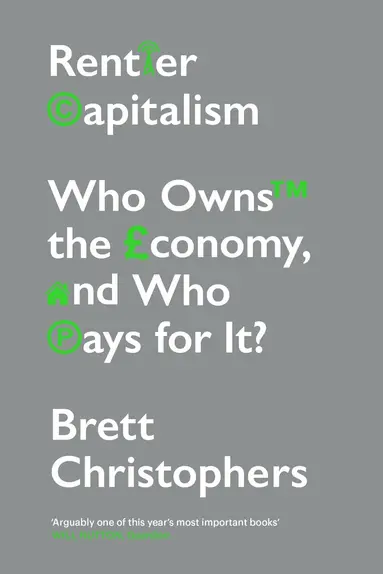
Rentier Capitalism
Brett Christophers
Från 186 kr
New Enclosure
Brett Christophers
Från 146 kr
Banking Across Boundaries
Brett Christophers
Från 273 kr
Rentier Capitalism
Brett Christophers
Från 120 kr
Our Lives in Their Portfolios
Brett Christophers
Från 158 kr
Price is Wrong
Brett Christophers
Från 241 kr
Upptäck liknande författare
Om du gillar Brett Christophers kommer du förmodligen att uppskatta även dessa författare inom ekonomi & ledarskap.