Författare
Bruno Latour
Bruno Latour är en uppskattad författare inom Samhälle och politik och Filosofi och religion med totalt 20 böcker tillgängliga på Bokkollen, utgivna hos John Wiley and Sons Ltd, Harvard University Press, OUP OXFORD.
Bland verken finns Facing Gaia, som toppar listan över Bruno Latours populäraste böcker. Verken spänner över samhälle & politik och tilltalar läsare som uppskattar genren.
Det senast publicerade verket av Bruno Latour är If we lose the Earth, we lose our souls, utgivet 2024.
Letar du efter något nytt att läsa? Prova Critical Zones – ett annat uppskattat verk av Bruno Latour.
På Bokkollen gör vi det enkelt att navigera i Bruno Latours författarskap. Vår databas uppdateras ständigt med nya släpp och format, så oavsett om du söker efter en lättläst pocket för semestern, en lyxig inbunden presentutgåva eller en digital ljudbok för pendlingen, har vi rätt utgåva för dig.
Jämför snabbt och smidigt priser på alla böcker av Bruno Latour hos Sveriges ledande bokhandlare – som Adlibris, Bokus och Akademibokhandeln – och hitta alltid det bästa erbjudandet utan att betala för mycket.
Facing Gaia
The emergence of modern sciences in the seventeenth century profoundly renewed our understanding of nature. For the last three centuries new ideas of nature have been continually developed by theology, politics, economics, and science, especially the sciences of the material world. The situation is even more unstable today, now that we have entered an ecological mutation of unprecedented scale. Some call it the Anthropocene, but it is best described as a new climatic regime. And a new regime it certainly is, since the many unexpected connections between human activity and the natural world oblige every one of us to reopen the earlier notions of nature and redistribute what had been packed inside. So the question now arises: what will replace the old ways of looking at nature? This book explores a potential candidate proposed by James Lovelock when he chose the name 'Gaia' for the fragile, complex system through which living phenomena modify the Earth. The fact that he was immediately misunderstood proves simply that his readers have tried to fit this new notion into an older frame, transforming Gaia into a single organism, a kind of giant thermostat, some sort of New Age goddess, or even divine Providence. In this series of lectures on 'natural religion,' Bruno Latour argues that the complex and ambiguous figure of Gaia offers, on the contrary, an ideal way to disentangle the ethical, political, theological, and scientific aspects of the now obsolete notion of nature. He lays the groundwork for a future collaboration among scientists, theologians, activists, and artists as they, and we, begin to adjust to the new climatic regime.
Hela bibliografin
Utforska alla Bruno Latours publicerade verk sorterade efter popularitet.
Facing Gaia
Bruno Latour
Från 263 kr
Making of Law
Bruno Latour
Från 273 kr
Politics of Nature
Bruno Latour
Från 334 kr
How to Inhabit the Earth
Bruno Latour
Från 163 kr
Reassembling the Social
Bruno Latour
Från 474 kr
On the Modern Cult of the Factish Gods
Bruno Latour
Från 250 kr
Inquiry into Modes of Existence
Bruno Latour
Från 243 kr
Var landar vi?
Bruno Latour
Från 179 kr
Pasteurization of France
Bruno Latour
Från 378 kr
Science in Action
Bruno Latour
Från 382 kr
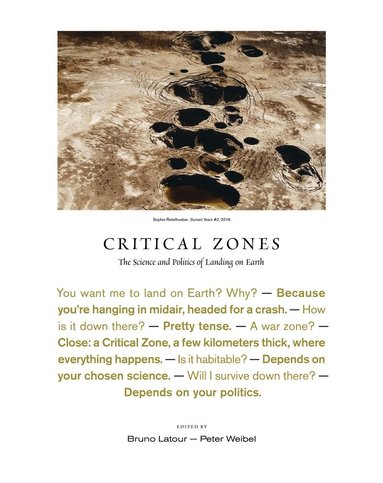
Critical Zones
Bruno Latour
Från 79 kr
Aramis, or The Love of Technology
Bruno Latour
Från 330 kr
Pandora’s Hope
Bruno Latour
Från 400 kr
If we lose the Earth, we lose our souls
Bruno Latour
Från 147 kr
We Have Never Been Modern
Bruno Latour
Från 325 kr
Science of Passionate Interests
Bruno Latour
Från 114 kr
Laboratory Life
Bruno Latour
Från 487 kr
After Lockdown
Bruno Latour
Från 146 kr
Prince and the Wolf: Latour and Harman at the LSE, The
Bruno Latour
Från 104 kr
On the Emergence of an Ecological Class
Bruno Latour
Från 129 kr
Upptäck liknande författare
Om du gillar Bruno Latour kommer du förmodligen att uppskatta även dessa författare inom samhälle & politik.