Författare
Charlotte & Peter Fiell
Charlotte & Peter Fiell är en uppskattad författare inom Kultur och Sport, fritid och hobby med totalt 15 böcker tillgängliga på Bokkollen, utgivna hos Taschen GmbH.
Bland verken finns 1000 Chairs, som toppar listan över Charlotte & Peter Fiells populäraste böcker. Verken spänner över kultur och tilltalar läsare som uppskattar genren.
Det senast publicerade verket av Charlotte & Peter Fiell är Skandinavisches Design, utgivet 2024.
Letar du efter något nytt att läsa? Prova Mackintosh – ett annat uppskattat verk av Charlotte & Peter Fiell.
På Bokkollen gör vi det enkelt att navigera i Charlotte & Peter Fiells författarskap. Vår databas uppdateras ständigt med nya släpp och format, så oavsett om du söker efter en lättläst pocket för semestern, en lyxig inbunden presentutgåva eller en digital ljudbok för pendlingen, har vi rätt utgåva för dig.
Jämför snabbt och smidigt priser på alla böcker av Charlotte & Peter Fiell hos Sveriges ledande bokhandlare – som Adlibris, Bokus och Akademibokhandeln – och hitta alltid det bästa erbjudandet utan att betala för mycket.
1000 Chairs
More than any other piece of furniture, the chair has been subjected to the wildest dreams of the designer. The particular curve of a backrest, or the twist of a leg, the angle of a seat or the color of the entire artifact; each element reflects the stylistic consciousness of an era.From Gerrit Rietveld and Alvar Aalto to Verner Panton and Eva Zeisel, from Art Nouveau to International Style, from Pop Art to Postmodernism, the history of the chair is so complex that it requires a comprehensive encyclopedic work to do it full justice. They are all here: Thonet's bentwood chairs and Hoffmann's sitting-machines, Marcel Breuer's Wassily chair and Ron Arad's avant-garde armchairs. Early designers and pioneers of the modern chair are presented alongside the most recent innovations in seating.This dedicated compendium displays each chair as pure form, along with biographical and historical information about the pieces and their designers. An illuminating tome for design aficionados and an essential reference for collectors.
Hela bibliografin
Utforska alla Charlotte & Peter Fiells publicerade verk sorterade efter popularitet.
1000 Chairs
Charlotte & Peter Fiell
Från 242 kr
Decorative Art 60s
Charlotte & Peter Fiell
Från 398 kr
Industrial Design A–Z
Charlotte & Peter Fiell
Från 242 kr
1000 Lights
Charlotte & Peter Fiell
Från 242 kr
Motorcycles
Charlotte & Peter Fiell
Från 299 kr
Skandinavisches Design
Charlotte & Peter Fiell
Från 269 kr
domus 1970–1979
Charlotte & Peter Fiell
Från 388 kr
domus 1960–1969
Charlotte & Peter Fiell
Från 388 kr
Mackintosh
Charlotte & Peter Fiell
Från 181 kr
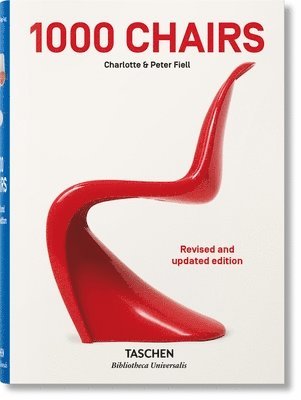
1000 Chairs
Charlotte & Peter Fiell
Från 399 kr
Scandinavian Design
Charlotte & Peter Fiell
Från 280 kr
Sports Cars
Charlotte & Peter Fiell
Från 299 kr
Decorative Art 50s
Charlotte & Peter Fiell
Från 383 kr
Decorative Art 70s
Charlotte & Peter Fiell
Från 398 kr
Morris
Charlotte & Peter Fiell
Från 181 kr
Upptäck liknande författare
Om du gillar Charlotte & Peter Fiell kommer du förmodligen att uppskatta även dessa författare inom kultur.