Författare
Christopher Bracken
Christopher Bracken är en uppskattad författare inom Skönlitteratur och Samhälle och politik med totalt 2 böcker tillgängliga på Bokkollen.
Bland verken finns Magical Criticism, som toppar listan över Christopher Brackens populäraste böcker. Verken spänner över skönlitteratur och tilltalar läsare som uppskattar genren.
Letar du efter något nytt att läsa? Prova Potlatch Papers – ett annat uppskattat verk av Christopher Bracken.
På Bokkollen gör vi det enkelt att navigera i Christopher Brackens författarskap. Vår databas uppdateras ständigt med nya släpp och format, så oavsett om du söker efter en lättläst pocket för semestern, en lyxig inbunden presentutgåva eller en digital ljudbok för pendlingen, har vi rätt utgåva för dig.
Jämför snabbt och smidigt priser på alla böcker av Christopher Bracken hos Sveriges ledande bokhandlare – som Adlibris, Bokus och Akademibokhandeln – och hitta alltid det bästa erbjudandet utan att betala för mycket.
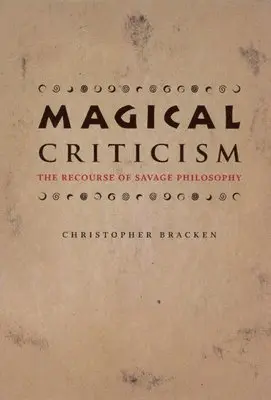
Magical Criticism
During the Enlightenment, Western scholars racialized ideas, deeming knowledge based on reality superior to that based on ideality. Scholars labeled inquiries into ideality, such as animism and soul migration, "savage philosophy," a clear indicator of the racism motivating the distinction between the real and the ideal. In their view, savage philosophers mistake connections between signs for connections between real objects and believe that discourse can have physical effects - in other words, they believe in magic. Christopher Bracken's "Magical Criticism" brings the unacknowledged history of this racialization to light and shows how, even as we have rejected ethnocentric notions of "the savage," they remain active today in everything from attacks on postmodernism to Native American land disputes. Here Bracken reveals that many of the most influential Western thinkers dabbled in savage philosophy, from Marx, Nietzsche, and Proust to Freud, Charles Sanders Peirce, and Walter Benjamin.For Bracken, this recourse to savage philosophy presents an opportunity to reclaim a magical criticism that can explain the very real effects created by the discourse of historians, anthropologists, philosophers, the media, and governments.
Hela bibliografin
Utforska alla Christopher Brackens publicerade verk sorterade efter popularitet.
Upptäck liknande författare
Om du gillar Christopher Bracken kommer du förmodligen att uppskatta även dessa författare inom skönlitteratur.
Boktips inom skönlitteratur
Vårens gåtfulla läsning: Dan Browns nya thriller
Upptäck Dan Browns senaste thriller, en gåtfull vårsaga fylld av hemligheter och snabba vändningar.
Påskläsning – Liken vi begravde, en gåtfull berättelse
Upptäck den gåtfulla skönlitteraturen i Liken vi begravde – en påskläsning om död, minne och försoning som berör djupt.
Mörka aprilkvällar blir heta med Hembiträdets hemlighet
När aprilregnet smattrar mot rutan blir Hembiträdets hemlighet en het, gåtfull följeslagare som håller dig vaken hela natten.
Mellan blomsterdoft och stjärnljus – en vårbok
Upptäck Malin Haawinds poetiska debut där vårens blommor möter natthimlens klarhet. En bok som glimmar av hopp och stjärnljus.