Författare
Graham Holderness
Graham Holderness är en uppskattad författare inom Skönlitteratur med totalt 1 bok tillgängliga på Bokkollen.
Bland verken finns Shakespeare and a Place Calling Itself Rome, som toppar listan över Graham Holdernesss populäraste böcker. Verken spänner över skönlitteratur och tilltalar läsare som uppskattar genren.
På Bokkollen gör vi det enkelt att navigera i Graham Holdernesss författarskap. Vår databas uppdateras ständigt med nya släpp och format, så oavsett om du söker efter en lättläst pocket för semestern, en lyxig inbunden presentutgåva eller en digital ljudbok för pendlingen, har vi rätt utgåva för dig.
Jämför snabbt och smidigt priser på alla böcker av Graham Holderness hos Sveriges ledande bokhandlare – som Adlibris, Bokus och Akademibokhandeln – och hitta alltid det bästa erbjudandet utan att betala för mycket.
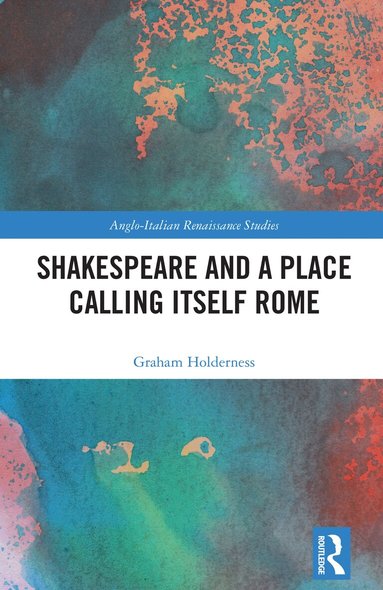
Shakespeare and a Place Calling Itself Rome
This new examination of Shakespeare's four Roman tragedies (Julius Caesar, Titus Andronicus, Coriolanus and Antony and Cleopatra) revisits Shakespeare's dramatic recreations of ancient Rome in the light of considerations of place:the places from which Shakespeare initiated his imaginative reconstructions, where plays are written and performedthe places he constructed within the plays, the places the plays imagine and recreate, together with the places from which he derived themthe places within which we as readers and spectators experience those creations, where such plays are read, viewed and critically analysed.Alongside this analysis the book explores contemporary critical debates and the uses of place and space in selected modern adaptations - the Taviani brothers' Italian film Caesar Must Die, Julie Taylor's film Titus, John Osborne's play A Place Calling Itself Rome and Ahmed Shawqi's Arabic Death of Cleopatra.The book provides a descriptive, palimpsestic map of the places within which Shakespeare's Roman plays operate, tracing the contours of Rome's Republic and Empire, overlaid with the Europe of Shakespeare's day, in which a Romanised London looked with fascination towards the East, towards Rome and Alexandria. Equipped with such a map we can attempt to do what Shakespeare did: to recreate ancient Rome in conjunction and rapprochement with its early modern and modern counterparts.
Hela bibliografin
Utforska alla Graham Holdernesss publicerade verk sorterade efter popularitet.
Upptäck liknande författare
Om du gillar Graham Holderness kommer du förmodligen att uppskatta även dessa författare inom skönlitteratur.
Boktips inom skönlitteratur
Vårens gåtfulla läsning: Dan Browns nya thriller
Upptäck Dan Browns senaste thriller, en gåtfull vårsaga fylld av hemligheter och snabba vändningar.
Påskläsning – Liken vi begravde, en gåtfull berättelse
Upptäck den gåtfulla skönlitteraturen i Liken vi begravde – en påskläsning om död, minne och försoning som berör djupt.
Mörka aprilkvällar blir heta med Hembiträdets hemlighet
När aprilregnet smattrar mot rutan blir Hembiträdets hemlighet en het, gåtfull följeslagare som håller dig vaken hela natten.
Mellan blomsterdoft och stjärnljus – en vårbok
Upptäck Malin Haawinds poetiska debut där vårens blommor möter natthimlens klarhet. En bok som glimmar av hopp och stjärnljus.