Författare
GW Stephen Brodsky
GW Stephen Brodsky är en uppskattad författare inom Skönlitteratur med totalt 1 bok tillgängliga på Bokkollen.
Bland verken finns Joseph Conrad and Honor, som toppar listan över GW Stephen Brodskys populäraste böcker. Verken spänner över skönlitteratur och tilltalar läsare som uppskattar genren.
På Bokkollen gör vi det enkelt att navigera i GW Stephen Brodskys författarskap. Vår databas uppdateras ständigt med nya släpp och format, så oavsett om du söker efter en lättläst pocket för semestern, en lyxig inbunden presentutgåva eller en digital ljudbok för pendlingen, har vi rätt utgåva för dig.
Jämför snabbt och smidigt priser på alla böcker av GW Stephen Brodsky hos Sveriges ledande bokhandlare – som Adlibris, Bokus och Akademibokhandeln – och hitta alltid det bästa erbjudandet utan att betala för mycket.
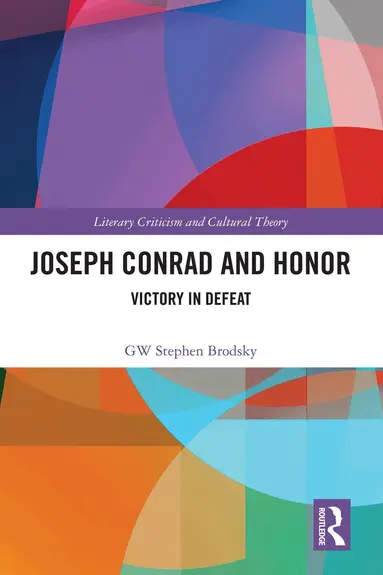
Joseph Conrad and Honor
Joseph Conrad and Honor: Victory in Defeat explores the idea and themes of honor both explicit and implicit in Conrad's life, letters and oeuvre, and its origins in Conrad's Polish, French and English philosophical, historical and cultural contexts. Focusing on Conrad's family history, his lives in Poland, England, at sea, and as a writer, the book also explores the idea of honor in Conrad's novels and stories, with especial focus on the Napoléonic era tales (e.g., "The Duel", "The Warrior's Soul", The Rover and Suspense), and from Conrad's eastern experience (e.g., Almayer's Folly and "Karain"). In Conrad's tradition true honor lies, not in material victory but in the victory of spirit even in defeat.In this new monograph, author GW Stephen Brodsky shows that Conrad's understanding of honor was shaped by the Polish szlachta (nobility) of clan and class, which emphasised conviction, courage, solidarity and fidelity to duty. For Conrad, honor was not merely a personal virtue but a communal ethic, grounded in disinterested service to one's class, nation, family and faith. This ethos contrasted sharply with what he saw as the fraudulent and ego-driven codes of honor in other cultures, such as the French cult of military glory, the English obsession with conformity, and the aristocratic fixation on aesthetics over ethics.Conrad's convictions are shown to contrast markedly with the moral decay and semantic degradation of honor in his era, where such terms as "duty" and "fidelity" had lost their sacred significance. An apparent neglect of honor in most Conrad scholarship is addressed-particularly in Western criticism focused on Conrad's perceived alienation and guilt-by emphasising the affirmative aspects of Conrad's art and his aristocratic vision through Polish and post-Glasnost perspectives.
Hela bibliografin
Utforska alla GW Stephen Brodskys publicerade verk sorterade efter popularitet.
Upptäck liknande författare
Om du gillar GW Stephen Brodsky kommer du förmodligen att uppskatta även dessa författare inom skönlitteratur.
Boktips inom skönlitteratur
Vårens gåtfulla läsning: Dan Browns nya thriller
Upptäck Dan Browns senaste thriller, en gåtfull vårsaga fylld av hemligheter och snabba vändningar.
Påskläsning – Liken vi begravde, en gåtfull berättelse
Upptäck den gåtfulla skönlitteraturen i Liken vi begravde – en påskläsning om död, minne och försoning som berör djupt.
Mörka aprilkvällar blir heta med Hembiträdets hemlighet
När aprilregnet smattrar mot rutan blir Hembiträdets hemlighet en het, gåtfull följeslagare som håller dig vaken hela natten.
Mellan blomsterdoft och stjärnljus – en vårbok
Upptäck Malin Haawinds poetiska debut där vårens blommor möter natthimlens klarhet. En bok som glimmar av hopp och stjärnljus.