Författare
Inger Birkeland
Inger Birkeland är en uppskattad författare inom Samhälle och politik med totalt 2 böcker tillgängliga på Bokkollen, utgivna hos Taylor & Francis Ltd.
Bland verken finns Cultural Sustainability and the Nature-Culture Interface, som toppar listan över Inger Birkelands populäraste böcker. Verken spänner över samhälle & politik och tilltalar läsare som uppskattar genren.
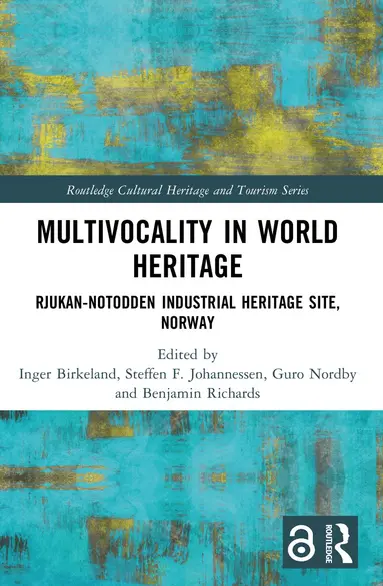
Letar du efter något nytt att läsa? Prova Multivocality in World Heritage – ett annat uppskattat verk av Inger Birkeland.
På Bokkollen gör vi det enkelt att navigera i Inger Birkelands författarskap. Vår databas uppdateras ständigt med nya släpp och format, så oavsett om du söker efter en lättläst pocket för semestern, en lyxig inbunden presentutgåva eller en digital ljudbok för pendlingen, har vi rätt utgåva för dig.
Jämför snabbt och smidigt priser på alla böcker av Inger Birkeland hos Sveriges ledande bokhandlare – som Adlibris, Bokus och Akademibokhandeln – och hitta alltid det bästa erbjudandet utan att betala för mycket.
Cultural Sustainability and the Nature-Culture Interface
As contemporary socio-ecological challenges such as climate change and biodiversity preservation have become more important, the three pillars concept has increasingly been used in planning and policy circles as a framework for analysis and action. However, the issue of how culture influences sustainability is still an underexplored theme. Understanding how culture can act as a resource to promote sustainability, rather than a barrier, is the key to the development of cultural sustainability.This book explores the interfaces between nature and culture through the perspective of cultural sustainability. A cultural perspective on environmental sustainability enables a renewal of sustainability discourse and practices across rural and urban landscapes, natural and cultural systems, stressing heterogeneity and complexity. The book focuses on the nature-culture interface conceptualised as a place where experiences, practices, policies, ideas and knowledge meet, are negotiated, discussed and resolved. Rather than looking for lost unities, or an imaginary view of harmonious relationships between humans and nature based in the past, it explores cases of interfaces that are context-sensitive and which consciously convey the problems of scale and time.While calling attention to a cultural or 'culturalised' view of the sustainability debate, this book questions the radical nature-culture dualism dominating positive modern thinking as well as its underlying view of nature as pre-given and independent from human life.
Hela bibliografin
Utforska alla Inger Birkelands publicerade verk sorterade efter popularitet.
Upptäck liknande författare
Om du gillar Inger Birkeland kommer du förmodligen att uppskatta även dessa författare inom samhälle & politik.