Författare
Jacob L. Mackey
Jacob L. Mackey är en uppskattad författare inom Skönlitteratur med totalt 1 bok tillgängliga på Bokkollen.
Bland verken finns Belief and Cult, som toppar listan över Jacob L. Mackeys populäraste böcker. Verken spänner över skönlitteratur och tilltalar läsare som uppskattar genren.
På Bokkollen gör vi det enkelt att navigera i Jacob L. Mackeys författarskap. Vår databas uppdateras ständigt med nya släpp och format, så oavsett om du söker efter en lättläst pocket för semestern, en lyxig inbunden presentutgåva eller en digital ljudbok för pendlingen, har vi rätt utgåva för dig.
Jämför snabbt och smidigt priser på alla böcker av Jacob L. Mackey hos Sveriges ledande bokhandlare – som Adlibris, Bokus och Akademibokhandeln – och hitta alltid det bästa erbjudandet utan att betala för mycket.
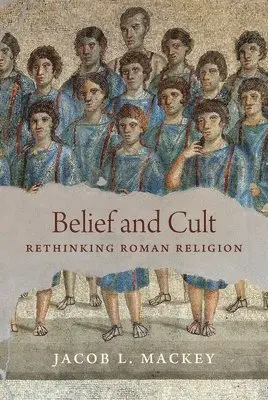
Belief and Cult
A groundbreaking reinterpretation that draws on cognitive theory to show that belief wasn't absent from-but rather was at the heart of-Roman religionBelief and Cult argues that belief isn't uniquely Christian but was central to ancient Roman religion. Drawing on cognitive theory, Jacob Mackey shows that despite having nothing to do with salvation or faith, belief underlay every aspect of Roman religious practices-emotions, individual and collective cult action, ritual norms, social reality, and social power. In doing so, he also offers a thorough argument for the importance of belief to other non-Christian religions.At the individual level, the book argues, belief played an indispensable role in the genesis of cult action and religious emotion. However, belief also had a collective dimension. The cognitive theory of Shared Intentionality shows how beliefs may be shared among individuals, accounting for the existence of written, unwritten, or even unspoken ritual norms. Shared beliefs permitted the choreography of collective cult action and gave cult acts their social meanings. The book also elucidates the role of shared belief in creating and maintaining Roman social reality. Shared belief allowed the Romans to endow agents, actions, and artifacts with socio-religious status and power. In a deep sense, no man could count as an augur and no act of animal slaughter as a successful offering to the gods, unless Romans collectively shared appropriate beliefs about these things.Closely examining augury, prayer, the religious enculturation of children, and the Romans' own theories of cognition and cult, Belief and Cult promises to revolutionize the understanding of Roman religion by demonstrating that none of its features makes sense without Roman belief.
Hela bibliografin
Utforska alla Jacob L. Mackeys publicerade verk sorterade efter popularitet.
Upptäck liknande författare
Om du gillar Jacob L. Mackey kommer du förmodligen att uppskatta även dessa författare inom skönlitteratur.
Boktips inom skönlitteratur
Vårens gåtfulla läsning: Dan Browns nya thriller
Upptäck Dan Browns senaste thriller, en gåtfull vårsaga fylld av hemligheter och snabba vändningar.
Påskläsning – Liken vi begravde, en gåtfull berättelse
Upptäck den gåtfulla skönlitteraturen i Liken vi begravde – en påskläsning om död, minne och försoning som berör djupt.
Mörka aprilkvällar blir heta med Hembiträdets hemlighet
När aprilregnet smattrar mot rutan blir Hembiträdets hemlighet en het, gåtfull följeslagare som håller dig vaken hela natten.
Mellan blomsterdoft och stjärnljus – en vårbok
Upptäck Malin Haawinds poetiska debut där vårens blommor möter natthimlens klarhet. En bok som glimmar av hopp och stjärnljus.