Författare
Jalaloddin Rumi
Jalaloddin Rumi är en uppskattad författare inom Skönlitteratur med totalt 1 bok tillgängliga på Bokkollen.
Bland verken finns Masnavi of Rumi, Book Three, som toppar listan över Jalaloddin Rumis populäraste böcker. Verken spänner över skönlitteratur och tilltalar läsare som uppskattar genren.
På Bokkollen gör vi det enkelt att navigera i Jalaloddin Rumis författarskap. Vår databas uppdateras ständigt med nya släpp och format, så oavsett om du söker efter en lättläst pocket för semestern, en lyxig inbunden presentutgåva eller en digital ljudbok för pendlingen, har vi rätt utgåva för dig.
Jämför snabbt och smidigt priser på alla böcker av Jalaloddin Rumi hos Sveriges ledande bokhandlare – som Adlibris, Bokus och Akademibokhandeln – och hitta alltid det bästa erbjudandet utan att betala för mycket.
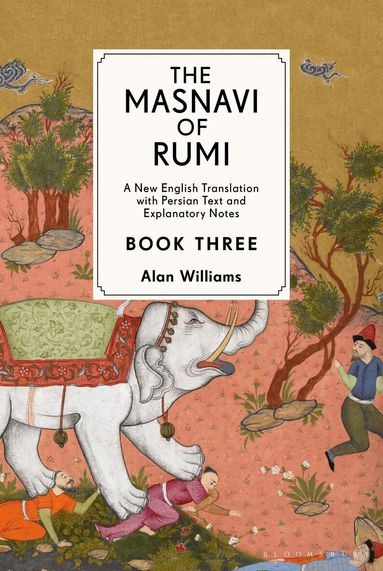
Masnavi of Rumi, Book Three
Jalaloddin Rumi's Masnavi-ye Ma'navi, or 'Spiritual Couplets', composed in the 13th Century, is a monumental work of poetry in the Sufi tradition of Islamic mysticism. For centuries before his love poetry became a literary phenomenon in the West, Rumi's Masnavi had been revered in the Islamic world as its greatest mystical text. Drawing upon a vast array of characters, stories and fables, and deeply versed in spiritual teaching, it takes us on a profound and playful journey of discovery along the path of divine love, toward its ultimate goal of union with the source of all Truth.The main theme of Book Three of the Masnavi is the strengthening of the spirit through purification of human knowledge in the acquisition of mystical wisdom. Rumi teaches that this mystical understanding is superior to the rational knowledge of the human intellect. By the end of this long book, the half-way point is reached in this mystical treatise of oceanic proportions. It may be said to be the most profound of the six books, in pursuing rational thinking to its very depths.Translated with an introduction, notes and analysis by Alan Williams and including the Persian text edited by Mohammad Este'lami.
Hela bibliografin
Utforska alla Jalaloddin Rumis publicerade verk sorterade efter popularitet.
Upptäck liknande författare
Om du gillar Jalaloddin Rumi kommer du förmodligen att uppskatta även dessa författare inom skönlitteratur.
Boktips inom skönlitteratur
Vårens gåtfulla läsning: Dan Browns nya thriller
Upptäck Dan Browns senaste thriller, en gåtfull vårsaga fylld av hemligheter och snabba vändningar.
Påskläsning – Liken vi begravde, en gåtfull berättelse
Upptäck den gåtfulla skönlitteraturen i Liken vi begravde – en påskläsning om död, minne och försoning som berör djupt.
Mörka aprilkvällar blir heta med Hembiträdets hemlighet
När aprilregnet smattrar mot rutan blir Hembiträdets hemlighet en het, gåtfull följeslagare som håller dig vaken hela natten.
Mellan blomsterdoft och stjärnljus – en vårbok
Upptäck Malin Haawinds poetiska debut där vårens blommor möter natthimlens klarhet. En bok som glimmar av hopp och stjärnljus.