Författare
Jenifer Presto
Jenifer Presto är en uppskattad författare inom Skönlitteratur med totalt 1 bok tillgängliga på Bokkollen.
Bland verken finns Geopoetics of Catastrophe, som toppar listan över Jenifer Prestos populäraste böcker. Verken spänner över skönlitteratur och tilltalar läsare som uppskattar genren.
På Bokkollen gör vi det enkelt att navigera i Jenifer Prestos författarskap. Vår databas uppdateras ständigt med nya släpp och format, så oavsett om du söker efter en lättläst pocket för semestern, en lyxig inbunden presentutgåva eller en digital ljudbok för pendlingen, har vi rätt utgåva för dig.
Jämför snabbt och smidigt priser på alla böcker av Jenifer Presto hos Sveriges ledande bokhandlare – som Adlibris, Bokus och Akademibokhandeln – och hitta alltid det bästa erbjudandet utan att betala för mycket.
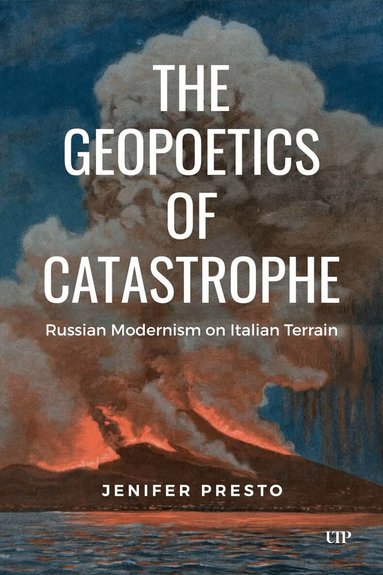
Geopoetics of Catastrophe
For the Russian modernists, Italy's cataclysmic terrain proved no less arresting than its art and culture. Earthquakes, volcanic eruptions, landslides, and the ruinous effects of tourism: these are the disasters that haunt their writings on Italy. Situated at the nexus of ecocriticism and aesthetics, The Geopoetics of Catastrophe posits that environmental upheaval was a potent force in the artistic engagement with Italy. Following an itinerary that spans from Etna to Vesuvius, this study uncovers the devastated Italy found in the works of such writers as Alexander Blok, Joseph Brodsky, Zinaida Gippius, Maxim Gorky, Vladislav Khodasevich, and Vladimir Nabokov. Subject to the vagaries of Russian and world history, these authors were drawn to the many disasters that ravaged the Italian landscape. Italy became a critical site for mapping Russian cultural anxieties amid the social and political upheavals of the twentieth century. It inspired a transnational strain of writing rooted not in Europe's metropolitan centres but rather in the destructive energies of the continent's southern periphery. By focusing on this realm of the imagination, this work shows that many of the key features of modern Russian literary culture were shaped by Italy's perilous and imperilled terrain. The book expands the scope of Russian environmental criticism beyond the borders of the nation, outlining a geopoetics that reflects the breadth of geography, the depth of geology, and the creativity of poetics.
Hela bibliografin
Utforska alla Jenifer Prestos publicerade verk sorterade efter popularitet.
Upptäck liknande författare
Om du gillar Jenifer Presto kommer du förmodligen att uppskatta även dessa författare inom skönlitteratur.
Boktips inom skönlitteratur
Vårens gåtfulla läsning: Dan Browns nya thriller
Upptäck Dan Browns senaste thriller, en gåtfull vårsaga fylld av hemligheter och snabba vändningar.
Påskläsning – Liken vi begravde, en gåtfull berättelse
Upptäck den gåtfulla skönlitteraturen i Liken vi begravde – en påskläsning om död, minne och försoning som berör djupt.
Mörka aprilkvällar blir heta med Hembiträdets hemlighet
När aprilregnet smattrar mot rutan blir Hembiträdets hemlighet en het, gåtfull följeslagare som håller dig vaken hela natten.
Mellan blomsterdoft och stjärnljus – en vårbok
Upptäck Malin Haawinds poetiska debut där vårens blommor möter natthimlens klarhet. En bok som glimmar av hopp och stjärnljus.