Författare
Jennifer M. Nader
Jennifer M. Nader är en uppskattad författare inom Skönlitteratur med totalt 1 bok tillgängliga på Bokkollen.
Bland verken finns Bodily Autonomy in 19th Century American Women's Writing, som toppar listan över Jennifer M. Naders populäraste böcker. Verken spänner över skönlitteratur och tilltalar läsare som uppskattar genren.
På Bokkollen gör vi det enkelt att navigera i Jennifer M. Naders författarskap. Vår databas uppdateras ständigt med nya släpp och format, så oavsett om du söker efter en lättläst pocket för semestern, en lyxig inbunden presentutgåva eller en digital ljudbok för pendlingen, har vi rätt utgåva för dig.
Jämför snabbt och smidigt priser på alla böcker av Jennifer M. Nader hos Sveriges ledande bokhandlare – som Adlibris, Bokus och Akademibokhandeln – och hitta alltid det bästa erbjudandet utan att betala för mycket.
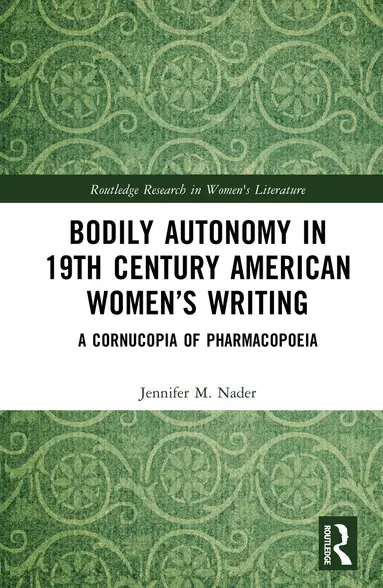
Bodily Autonomy in 19th Century American Women's Writing
Bodily Autonomy in 19th Century American Women's Writing: A Cornucopia of Pharmacopoeia investigates literary and autobiographical texts by nineteenth century American women, examining how women used herbal remedies to maintain bodily autonomy and how that autonomy was progressively eroded with the rise of plant-based tropane solanaceae alkaloids, and later, synthetic and anaesthetic drugs.Once chemists distilled alkaloids from plants, women's bodily autonomy became increasingly threatened and regulated by patriarchal ideologies at familial, state, and federal levels-threats compounded by the rise of pharmaceuticals, the medical profession, and asylums. In asylum settings especially, these forces converged to strip women of bodily autonomy entirely, a loss further intensified by the introduction of anaesthetics. Few studies engage directly with nineteenth-century American literature and autobiography as critical sources for understanding these dynamics. This book addresses that gap by examining how literary and autobiographical texts from the period depict women's efforts to secure bodily autonomy in the face of restrictive legal, medical, and social systems.This volume is written for a broad audience: students, teacher-scholars, and researchers interested in nineteenth-century American women's bodily autonomy. It is suitable for medical humanities courses, classes examining historical practices in law, medicine, psychiatry, ethics, chemistry, botany, as well as courses on American cultural practices such as American Studies.
Hela bibliografin
Utforska alla Jennifer M. Naders publicerade verk sorterade efter popularitet.
Upptäck liknande författare
Om du gillar Jennifer M. Nader kommer du förmodligen att uppskatta även dessa författare inom skönlitteratur.
Boktips inom skönlitteratur
Vårens gåtfulla läsning: Dan Browns nya thriller
Upptäck Dan Browns senaste thriller, en gåtfull vårsaga fylld av hemligheter och snabba vändningar.
Påskläsning – Liken vi begravde, en gåtfull berättelse
Upptäck den gåtfulla skönlitteraturen i Liken vi begravde – en påskläsning om död, minne och försoning som berör djupt.
Mörka aprilkvällar blir heta med Hembiträdets hemlighet
När aprilregnet smattrar mot rutan blir Hembiträdets hemlighet en het, gåtfull följeslagare som håller dig vaken hela natten.
Mellan blomsterdoft och stjärnljus – en vårbok
Upptäck Malin Haawinds poetiska debut där vårens blommor möter natthimlens klarhet. En bok som glimmar av hopp och stjärnljus.