Författare
Jonas Teupert
Jonas Teupert är en uppskattad författare inom Skönlitteratur med totalt 1 bok tillgängliga på Bokkollen.
Bland verken finns Fugitive Forms, som toppar listan över Jonas Teuperts populäraste böcker. Verken spänner över skönlitteratur och tilltalar läsare som uppskattar genren.
På Bokkollen gör vi det enkelt att navigera i Jonas Teuperts författarskap. Vår databas uppdateras ständigt med nya släpp och format, så oavsett om du söker efter en lättläst pocket för semestern, en lyxig inbunden presentutgåva eller en digital ljudbok för pendlingen, har vi rätt utgåva för dig.
Jämför snabbt och smidigt priser på alla böcker av Jonas Teupert hos Sveriges ledande bokhandlare – som Adlibris, Bokus och Akademibokhandeln – och hitta alltid det bästa erbjudandet utan att betala för mycket.
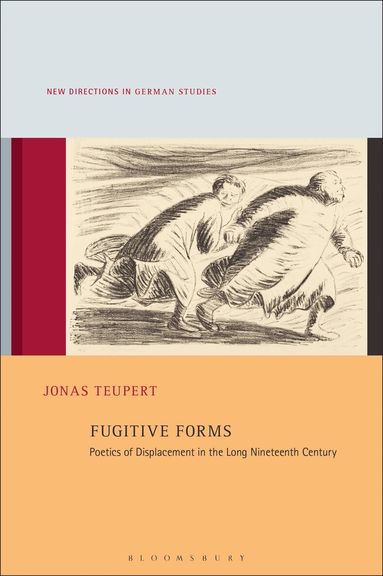
Fugitive Forms
Jonas Teupert theorizes the "fugitive forms" of ephemeral German-language prose writings from the long-19th century, drawing a link between this period's literary history and political philosophy and the refugee narratives from our current moment.Fugitive Forms traces the German term for refugee, "Flüchtling," also "fugitive" and "fleeting," through a genealogy of 19th-century prose writings that articulate ambivalent experiences of displacement. These fast-paced and ephemeral writings - often short stories, small prose pieces, and travelogues - evade classical genres and respond to the disruptive, volatile nature of their political present.By engaging questions of literary form with history, philosophy, and media aesthetics, Teupert conceptualizes fugitive writing as a form that enacts the precarious flight toward freedom. The long 19th century, in addition to being relatively understudied within migration studies, represents an interstitial period in the history of modern politics. While this era often has been overlooked in discussion of the formation of subject and state, Teupert argues that the concept of fugitivity as a path towards freedom offers new insights into the resistant potential of literature produced before human movement fell under the control of state power.Reading canonical and lesser-known works by Heinrich von Kleist, Heinrich Heine, and Robert Walser, this book provides a history of writing under conditions of displacement and develops fugitivity as a new category for German Studies. Furthermore, Fugitive Forms makes a case that the Germanophone canon offers literary strategies to critique and imagine community in an age of modern biopolitics.
Hela bibliografin
Utforska alla Jonas Teuperts publicerade verk sorterade efter popularitet.
Upptäck liknande författare
Om du gillar Jonas Teupert kommer du förmodligen att uppskatta även dessa författare inom skönlitteratur.
Boktips inom skönlitteratur
Vårens gåtfulla läsning: Dan Browns nya thriller
Upptäck Dan Browns senaste thriller, en gåtfull vårsaga fylld av hemligheter och snabba vändningar.
Påskläsning – Liken vi begravde, en gåtfull berättelse
Upptäck den gåtfulla skönlitteraturen i Liken vi begravde – en påskläsning om död, minne och försoning som berör djupt.
Mörka aprilkvällar blir heta med Hembiträdets hemlighet
När aprilregnet smattrar mot rutan blir Hembiträdets hemlighet en het, gåtfull följeslagare som håller dig vaken hela natten.
Mellan blomsterdoft och stjärnljus – en vårbok
Upptäck Malin Haawinds poetiska debut där vårens blommor möter natthimlens klarhet. En bok som glimmar av hopp och stjärnljus.