Författare
Kenneth Hodges
Kenneth Hodges är en uppskattad författare inom Skönlitteratur med totalt 1 bok tillgängliga på Bokkollen.
Bland verken finns How Spenser Reformed Malory, som toppar listan över Kenneth Hodgess populäraste böcker. Verken spänner över skönlitteratur och tilltalar läsare som uppskattar genren.
På Bokkollen gör vi det enkelt att navigera i Kenneth Hodgess författarskap. Vår databas uppdateras ständigt med nya släpp och format, så oavsett om du söker efter en lättläst pocket för semestern, en lyxig inbunden presentutgåva eller en digital ljudbok för pendlingen, har vi rätt utgåva för dig.
Jämför snabbt och smidigt priser på alla böcker av Kenneth Hodges hos Sveriges ledande bokhandlare – som Adlibris, Bokus och Akademibokhandeln – och hitta alltid det bästa erbjudandet utan att betala för mycket.
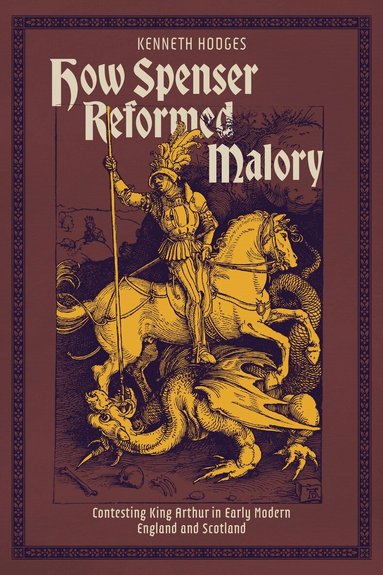
How Spenser Reformed Malory
A major contribution to Spenser studies, Arthurian scholarship, and early modern medievalism, revealing Spenser's The Faerie Queene as a sustained Protestant response to Malory.King Arthur remained a potent figure in early modern Britain due to the continued popularity of Sir Thomas Malory's Le Morte Darthur (1485). Writers in England and Scotland competed to adapt Arthur for new purposes. Edmund Spenser's The Faerie Queene (1590; 1596) offers a reformed and purified legend. Kenneth Hodges shows that, while it has long seemed remarkably independent of Malory, The Faerie Queene is structured as a sustained and detailed response to Le Morte Darthur. For Protestant writers, Malory's enduring vision of the Arthurian past posed urgent problems, shaped as it was by Catholic devotion and marked by adultery and sexual violence. Through detailed comparative readings, the study shows how Spenser systematically rewrote these elements in the 1590 poem, before returning more selectively and sympathetically to Malory in 1596. In doing so, it reveals how Arthurian tradition became a site of religious, political, and national contestation in Reformation Britain. Bridging medieval and early modern literary cultures, this book offers a major new account of how literary tradition is reshaped under ideological pressure.
Hela bibliografin
Utforska alla Kenneth Hodgess publicerade verk sorterade efter popularitet.
Upptäck liknande författare
Om du gillar Kenneth Hodges kommer du förmodligen att uppskatta även dessa författare inom skönlitteratur.
Boktips inom skönlitteratur
Vårens gåtfulla läsning: Dan Browns nya thriller
Upptäck Dan Browns senaste thriller, en gåtfull vårsaga fylld av hemligheter och snabba vändningar.
Påskläsning – Liken vi begravde, en gåtfull berättelse
Upptäck den gåtfulla skönlitteraturen i Liken vi begravde – en påskläsning om död, minne och försoning som berör djupt.
Mörka aprilkvällar blir heta med Hembiträdets hemlighet
När aprilregnet smattrar mot rutan blir Hembiträdets hemlighet en het, gåtfull följeslagare som håller dig vaken hela natten.
Mellan blomsterdoft och stjärnljus – en vårbok
Upptäck Malin Haawinds poetiska debut där vårens blommor möter natthimlens klarhet. En bok som glimmar av hopp och stjärnljus.