Författare
Mark Richards
Mark Richards är en uppskattad författare inom Data och IT och Sport, fritid och hobby med totalt 5 böcker tillgängliga på Bokkollen, utgivna hos O'Reilly Media, McGraw-Hill Education, Cicerone Press.
Bland verken finns Fundamentals of Software Architecture, som toppar listan över Mark Richardss populäraste böcker. Verken spänner över data & it och tilltalar läsare som uppskattar genren.
Det senast publicerade verket av Mark Richards är Hadrian's Wall Path, utgivet 2025.
Letar du efter något nytt att läsa? Prova Fundamentals of Software Architecture – ett annat uppskattat verk av Mark Richards.
På Bokkollen gör vi det enkelt att navigera i Mark Richardss författarskap. Vår databas uppdateras ständigt med nya släpp och format, så oavsett om du söker efter en lättläst pocket för semestern, en lyxig inbunden presentutgåva eller en digital ljudbok för pendlingen, har vi rätt utgåva för dig.
Jämför snabbt och smidigt priser på alla böcker av Mark Richards hos Sveriges ledande bokhandlare – som Adlibris, Bokus och Akademibokhandeln – och hitta alltid det bästa erbjudandet utan att betala för mycket.
Fundamentals of Software Architecture
Salary surveys worldwide regularly place software architect in the top 10 best jobs, yet no real guide exists to help developers become architects. Until now. This updated edition provides a comprehensive overview of software architecture's many aspects, with five new chapters covering the latest insights from the field. Aspiring and existing architects alike will examine architectural characteristics, architectural patterns, component determination, diagramming architecture, governance, data, generative AI, team topologies, and many other topics.Mark Richards and Neal Ford-hands-on practitioners who have taught software architecture classes professionally for years-focus on architecture principles that apply across all technology stacks. You'll explore software architecture in a modern light, taking into account all the innovations of the past decade.This book examines:Architecture styles and patterns: Microservices, modular monoliths, microkernels, layered architectures, and many moreComponents: Identification, coupling, cohesion, partitioning, and granularitySoft skills: Effective team management, collaboration, business engagement models, negotiation, presentations, and moreModernity: Engineering practices and operational approaches that have changed radically in the past few years, including cloud considerations and generative AIArchitecture as an engineering discipline: Repeatable results, metrics, and concrete valuations that add rigor to software architecture
Hela bibliografin
Utforska alla Mark Richardss publicerade verk sorterade efter popularitet.
Fundamentals of Software Architecture
Mark Richards
Från 663 kr
Fundamentals of Radar Signal Processing, Third Edition
Mark Richards
Från 1 499 kr
Hadrian's Wall Path
Mark Richards
Från 202 kr
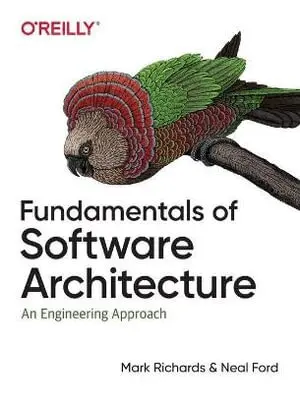
Fundamentals of Software Architecture
Mark Richards
Från 662 kr

Hadrian's Wall Path Map Booklet
Mark Richards
Från 209 kr
Upptäck liknande författare
Om du gillar Mark Richards kommer du förmodligen att uppskatta även dessa författare inom data & it.