Författare
Mark Stoneking
Mark Stoneking är en uppskattad författare inom Samhälle och politik och Naturvetenskap och teknik med totalt 2 böcker tillgängliga på Bokkollen, utgivna hos John Wiley and Sons Ltd.
Bland verken finns Introduction to Molecular Anthropology, som toppar listan över Mark Stonekings populäraste böcker. Verken spänner över samhälle & politik och tilltalar läsare som uppskattar genren.
Letar du efter något nytt att läsa? Prova Introduction to Molecular Anthropology – ett annat uppskattat verk av Mark Stoneking.
På Bokkollen gör vi det enkelt att navigera i Mark Stonekings författarskap. Vår databas uppdateras ständigt med nya släpp och format, så oavsett om du söker efter en lättläst pocket för semestern, en lyxig inbunden presentutgåva eller en digital ljudbok för pendlingen, har vi rätt utgåva för dig.
Jämför snabbt och smidigt priser på alla böcker av Mark Stoneking hos Sveriges ledande bokhandlare – som Adlibris, Bokus och Akademibokhandeln – och hitta alltid det bästa erbjudandet utan att betala för mycket.
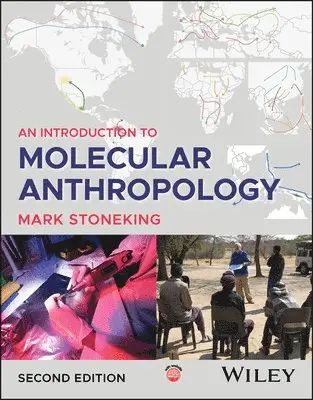
Introduction to Molecular Anthropology
Molecular anthropology uses molecular genetic methods to address questions and issues of anthropological interest. More specifically, molecular anthropology is concerned with genetic evidence concerning human origins, migrations, and population relationships, including related topics such as the role of recent natural selection in human population differentiation, or the impact of particular social systems on patterns of human genetic variation.Organized into three major sections, An Introduction to Molecular Anthropology first covers the basics of genetics - what genes are, what they do, and how they do it - as well as how genes behave in populations and how evolution influences them. The following section provides an overview of the different kinds of genetic variation in humans, and how this variation is analyzed and used to make evolutionary inferences. The third section concludes with a presentation of the current state of genetic evidence for human origins, the spread of humans around the world, the role of selection and adaptation in human evolution, and the impact of culture on human genetic variation. A final, concluding chapter discusses various aspects of molecular anthropology in the genomics era, including personal ancestry testing and personal genomics.An Introduction to Molecular Anthropology is an invaluable resource for students studying human evolution, biological anthropology, or molecular anthropology, as well as a reference for anthropologists and anyone else interested in the genetic history of humans.
Hela bibliografin
Utforska alla Mark Stonekings publicerade verk sorterade efter popularitet.
Upptäck liknande författare
Om du gillar Mark Stoneking kommer du förmodligen att uppskatta även dessa författare inom samhälle & politik.