Författare
Martin McLaughlin
Martin McLaughlin är en uppskattad författare inom Skönlitteratur med totalt 1 bok tillgängliga på Bokkollen.
Bland verken finns Leon Battista Alberti, som toppar listan över Martin McLaughlins populäraste böcker. Verken spänner över skönlitteratur och tilltalar läsare som uppskattar genren.
På Bokkollen gör vi det enkelt att navigera i Martin McLaughlins författarskap. Vår databas uppdateras ständigt med nya släpp och format, så oavsett om du söker efter en lättläst pocket för semestern, en lyxig inbunden presentutgåva eller en digital ljudbok för pendlingen, har vi rätt utgåva för dig.
Jämför snabbt och smidigt priser på alla böcker av Martin McLaughlin hos Sveriges ledande bokhandlare – som Adlibris, Bokus och Akademibokhandeln – och hitta alltid det bästa erbjudandet utan att betala för mycket.
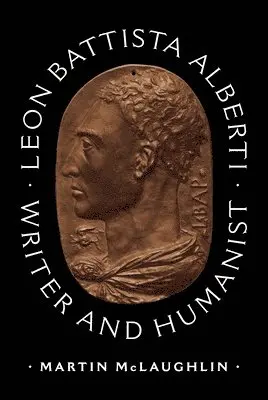
Leon Battista Alberti
The first book in English to examine Leon Battista Alberti's major literary works in Latin and Italian, which are often overshadowed by his achievements in architectureLeon Battista Alberti (1404-1472) was one of the most prolific and original writers of the Italian Renaissance-a fact often eclipsed by his more celebrated achievements as an art theorist and architect, and by Jacob Burckhardt's mythologizing of Alberti as a "Renaissance or Universal Man." In this book, Martin McLaughlin counters this partial perspective on Alberti, considering him more broadly as a writer dedicated to literature and humanism, a major protagonist and experimentalist in the literary scene of early Renaissance Italy. McLaughlin, a noted authority on Alberti, examines all of Alberti's major works in Latin and the Italian vernacular and analyzes his vast knowledge of classical texts and culture.McLaughlin begins with what we know of Alberti's life, comparing the facts laid out in Alberti's autobiography with the myth created in the nineteenth century by Burckhardt, before moving on to his extraordinarily wide knowledge of classical texts. He then turns to Alberti's works, tracing his development as a writer through texts that range from an early comedy in Latin successfully passed off as the work of a fictitious ancient author to later philosophical dialogues written in the Italian vernacular (a revolutionary choice at the time); humorous works in Latin, including the first novel in that language since antiquity; and the famous treatises on painting and architecture. McLaughlin also examines the astonishing range of Alberti's ancient sources and how this reading influenced his writing; what the humanist read, he argues, often explains what he wrote, and what he wrote reflected his relentless industry and pursuit of originality.
Hela bibliografin
Utforska alla Martin McLaughlins publicerade verk sorterade efter popularitet.
Upptäck liknande författare
Om du gillar Martin McLaughlin kommer du förmodligen att uppskatta även dessa författare inom skönlitteratur.
Boktips inom skönlitteratur
Vårens gåtfulla läsning: Dan Browns nya thriller
Upptäck Dan Browns senaste thriller, en gåtfull vårsaga fylld av hemligheter och snabba vändningar.
Påskläsning – Liken vi begravde, en gåtfull berättelse
Upptäck den gåtfulla skönlitteraturen i Liken vi begravde – en påskläsning om död, minne och försoning som berör djupt.
Mörka aprilkvällar blir heta med Hembiträdets hemlighet
När aprilregnet smattrar mot rutan blir Hembiträdets hemlighet en het, gåtfull följeslagare som håller dig vaken hela natten.
Mellan blomsterdoft och stjärnljus – en vårbok
Upptäck Malin Haawinds poetiska debut där vårens blommor möter natthimlens klarhet. En bok som glimmar av hopp och stjärnljus.