Författare
Michelle Sacks
Michelle Sacks är en uppskattad författare inom Skönlitteratur med totalt 1 bok tillgängliga på Bokkollen.
Bland verken finns Dancing at the End of the World, som toppar listan över Michelle Sackss populäraste böcker. Verken spänner över skönlitteratur och tilltalar läsare som uppskattar genren.
På Bokkollen gör vi det enkelt att navigera i Michelle Sackss författarskap. Vår databas uppdateras ständigt med nya släpp och format, så oavsett om du söker efter en lättläst pocket för semestern, en lyxig inbunden presentutgåva eller en digital ljudbok för pendlingen, har vi rätt utgåva för dig.
Jämför snabbt och smidigt priser på alla böcker av Michelle Sacks hos Sveriges ledande bokhandlare – som Adlibris, Bokus och Akademibokhandeln – och hitta alltid det bästa erbjudandet utan att betala för mycket.
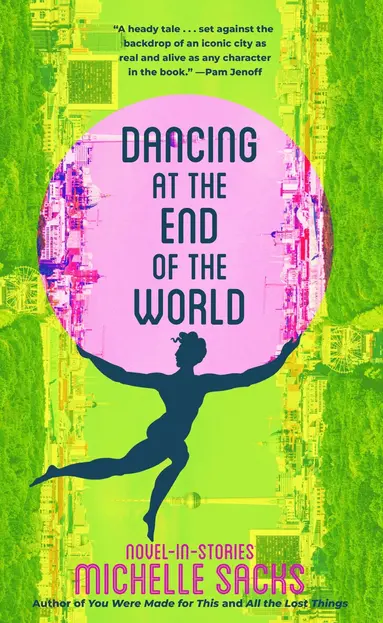
Dancing at the End of the World
"A gripping story of two sisters struggling to forget an unspeakable horror in postwar Berlin, a loveless city where survival, love, and lust intertwine with painful intricacy."-Weina Dai Randel, the Wall Street Journal bestselling author of The Master JewelerDancing at the End of the World is a sprawling, century-spanning collection of interconnected stories that traces Berlin's turbulent history through the lives of its inhabitants, integrating survival, reinvention, and the echoes of trauma with lyrical prose and unforgettable characters. Beginning in 1933 amidst the rumblings of fascism and the demise of the Weimar Republic, and concluding in the fraught social and political climate of the present day, the collection weaves seamlessly through the defining years of the iconic city.From the first story, we are introduced to Klara von Arnsberg, the aristocratic daughter of a famed industrialist, whose fierce instinct for both survival and reinvention is a mirror for that of Berlin itself. The life-or rather, many lives-that Klara builds for herself over the decades to come, are ever entangled with the fate of the city as we bear witness to the Holocaust, the post-war years, the Cold War, the fall of the Berlin Wall, and the ensuing years of dramatic transformation. As we move through the decades of the twentieth and twenty-first century, Klara is ever-present in the stories and the characters we encounter: Turkish guest workers in the 1960s and Syrian refugees in the twenty-first century, frustrated housewives in the new Berlin of money and rampant gentrification, Cold War Berliners hardened by unimaginable cruelty, expats in search of themselves, tech entrepreneurs who dream of immortality, and the lost children of the cultural revolution. All are linked to Klara, to her desires and fears, her greatest love, and the ultimate fate of both her legacy and the country itself.
Hela bibliografin
Utforska alla Michelle Sackss publicerade verk sorterade efter popularitet.
Upptäck liknande författare
Om du gillar Michelle Sacks kommer du förmodligen att uppskatta även dessa författare inom skönlitteratur.
Boktips inom skönlitteratur
Vårens gåtfulla läsning: Dan Browns nya thriller
Upptäck Dan Browns senaste thriller, en gåtfull vårsaga fylld av hemligheter och snabba vändningar.
Påskläsning – Liken vi begravde, en gåtfull berättelse
Upptäck den gåtfulla skönlitteraturen i Liken vi begravde – en påskläsning om död, minne och försoning som berör djupt.
Mörka aprilkvällar blir heta med Hembiträdets hemlighet
När aprilregnet smattrar mot rutan blir Hembiträdets hemlighet en het, gåtfull följeslagare som håller dig vaken hela natten.
Mellan blomsterdoft och stjärnljus – en vårbok
Upptäck Malin Haawinds poetiska debut där vårens blommor möter natthimlens klarhet. En bok som glimmar av hopp och stjärnljus.