Författare
Na'ama Rokem
Na'ama Rokem är en uppskattad författare inom Skönlitteratur med totalt 2 böcker tillgängliga på Bokkollen.
Bland verken finns Zionism in Translation, som toppar listan över Na'ama Rokems populäraste böcker. Verken spänner över skönlitteratur och tilltalar läsare som uppskattar genren.
Letar du efter något nytt att läsa? Prova Zionism in Translation – ett annat uppskattat verk av Na'ama Rokem.
På Bokkollen gör vi det enkelt att navigera i Na'ama Rokems författarskap. Vår databas uppdateras ständigt med nya släpp och format, så oavsett om du söker efter en lättläst pocket för semestern, en lyxig inbunden presentutgåva eller en digital ljudbok för pendlingen, har vi rätt utgåva för dig.
Jämför snabbt och smidigt priser på alla böcker av Na'ama Rokem hos Sveriges ledande bokhandlare – som Adlibris, Bokus och Akademibokhandeln – och hitta alltid det bästa erbjudandet utan att betala för mycket.

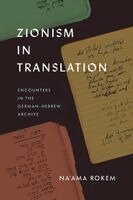
Zionism in Translation
Examining a network of correspondences and encounters that cross between German and Hebrew, Zionism in Translation argues that the space between the languages enabled ambivalent conversations about the foundation of the State of Israel.Zionism in Translation concerns exchanges-primarily of letters but also drafts, reviews, and other ephemera-sent to or from Jerusalem in the decades after 1948. All were written in German and Hebrew by a fascinating range of literary figures, including Hannah Arendt, Gershom Scholem, Yehuda Amichai, Ludwig Strauss, Erich Auerbach, Walter Benjamin, Leah Goldberg, Peter Szondi, Paul Celan, and Tuvia Ruebner. Na'ama Rokem illuminates the complexities that emerge as the two languages mix in this extraordinary epistolary network.The writers that Rokem studies here contend with the genocidal violence that brought the rich historical relation between German and Hebrew to a seeming end. They also grapple, in different ways, with the new reality in Israel/Palestine in the wake of the founding of the State of Israel and the Palestinian Nakba. The bilingual conversation that crosses over between German and Hebrew in these letters thus centers around the question of Jewish fate in the twentieth century and is immersed in negotiations about Jewish nationalism, the Zionist movement, and the possibilities of Jewish poetry. In the space between German and Hebrew, Rokem argues, the protagonists of her story voice ambivalences and hesitancies not found elsewhere.Zionism in Translation joins a growing body of scholarship that uncovers the complex modes of belonging and resistance that unfold around the Zionist movement in the twentieth century. It will interest all readers concerned with modern Jewish intellectual, cultural, and literary history, the history of Zionism, and writers such as Arendt or Celan.
Hela bibliografin
Utforska alla Na'ama Rokems publicerade verk sorterade efter popularitet.
Upptäck liknande författare
Om du gillar Na'ama Rokem kommer du förmodligen att uppskatta även dessa författare inom skönlitteratur.
Boktips inom skönlitteratur
Vårens gåtfulla läsning: Dan Browns nya thriller
Upptäck Dan Browns senaste thriller, en gåtfull vårsaga fylld av hemligheter och snabba vändningar.
Påskläsning – Liken vi begravde, en gåtfull berättelse
Upptäck den gåtfulla skönlitteraturen i Liken vi begravde – en påskläsning om död, minne och försoning som berör djupt.
Mörka aprilkvällar blir heta med Hembiträdets hemlighet
När aprilregnet smattrar mot rutan blir Hembiträdets hemlighet en het, gåtfull följeslagare som håller dig vaken hela natten.
Mellan blomsterdoft och stjärnljus – en vårbok
Upptäck Malin Haawinds poetiska debut där vårens blommor möter natthimlens klarhet. En bok som glimmar av hopp och stjärnljus.