Författare
Naomi Scheinerman
Naomi Scheinerman är en uppskattad författare inom Samhälle och politik med totalt 2 böcker tillgängliga på Bokkollen.
Bland verken finns Regulating the Revolution, som toppar listan över Naomi Scheinermans populäraste böcker. Verken spänner över samhälle & politik och tilltalar läsare som uppskattar genren.
Letar du efter något nytt att läsa? Prova Regulating the Revolution – ett annat uppskattat verk av Naomi Scheinerman.
På Bokkollen gör vi det enkelt att navigera i Naomi Scheinermans författarskap. Vår databas uppdateras ständigt med nya släpp och format, så oavsett om du söker efter en lättläst pocket för semestern, en lyxig inbunden presentutgåva eller en digital ljudbok för pendlingen, har vi rätt utgåva för dig.
Jämför snabbt och smidigt priser på alla böcker av Naomi Scheinerman hos Sveriges ledande bokhandlare – som Adlibris, Bokus och Akademibokhandeln – och hitta alltid det bästa erbjudandet utan att betala för mycket.
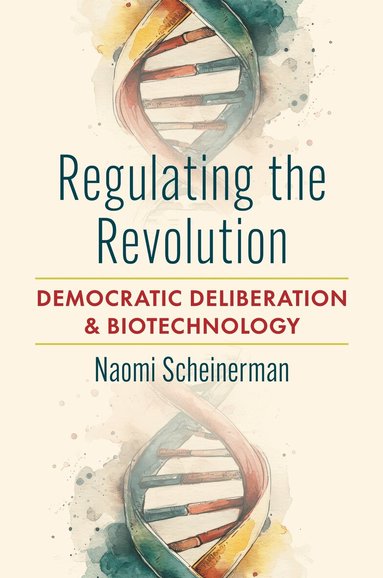
Regulating the Revolution
The 2012 discovery of CRISPR-Cas9, a revolutionary gene editing tool, embroiled scientists, ethicists, policymakers, and patient advocates in seemingly intractable conversations regarding the moral, social, and political implications of editing DNA. Simultaneously, the regulatory and governance environment into which the technology was introduced required modification to address its moral and safety risks. Naomi Scheinerman uses CRISPR-Cas9 as a case study to theorize a political process geared toward aiding the ethical and responsible regulation of technological innovation. Building on years of work by bioethicists and in response to calls for broader participation in legislative law-making, Scheinerman offers a direct intervention and justification for how "the people" can and should engage in democratic deliberation during regulatory rulemaking within the administrative state. Scheinerman develops and defends a democratic regulatory framework that integrates the important authorities of both experts and non-experts, the goals of prudential and moral decision-making, and the connection between regulating the market with downstream goals of justice and equality to shape a more ethical future.
Hela bibliografin
Utforska alla Naomi Scheinermans publicerade verk sorterade efter popularitet.
Upptäck liknande författare
Om du gillar Naomi Scheinerman kommer du förmodligen att uppskatta även dessa författare inom samhälle & politik.