Författare
Norman Ridley
Norman Ridley är en uppskattad författare inom Historia och arkeologi och Samhälle och politik med totalt 6 böcker tillgängliga på Bokkollen, utgivna hos Pen & Sword Books Ltd.
Bland verken finns Reinhard Gehlen: Hitler’s Spymaster, som toppar listan över Norman Ridleys populäraste böcker. Verken spänner över historia & arkeologi och tilltalar läsare som uppskattar genren.
Det senast publicerade verket av Norman Ridley är When The World Stood on the Brink of Nuclear War, utgivet 2025.
Letar du efter något nytt att läsa? Prova Hitler's Gold – ett annat uppskattat verk av Norman Ridley.
På Bokkollen gör vi det enkelt att navigera i Norman Ridleys författarskap. Vår databas uppdateras ständigt med nya släpp och format, så oavsett om du söker efter en lättläst pocket för semestern, en lyxig inbunden presentutgåva eller en digital ljudbok för pendlingen, har vi rätt utgåva för dig.
Jämför snabbt och smidigt priser på alla böcker av Norman Ridley hos Sveriges ledande bokhandlare – som Adlibris, Bokus och Akademibokhandeln – och hitta alltid det bästa erbjudandet utan att betala för mycket.
Reinhard Gehlen: Hitler’s Spymaster
Eleven years after Reinhard Gehlen, the head of Adolf Hitler's Eastern Front military intelligence unit, emerged from hiding to hand himself over to US forces, he had, with the help of the American CIA, created a legend for himself as founder and first president of the West German Secret Service. In this role he employed many of the same Wehrmacht and SS officers he had served with during the Second World War.All through the steady progression of his career before and during the Second World War, Gehlen had been far too industrious and committed to court the limelight. Then after the defeat of Germany, when he transferred his allegiance to the CIA and later became head of the Bundesnachrichtendienst, he became a man whom Hugh Trevor Roper's described as someone who 'always moved in the shadows'.For some, the German intelligence network that Gehlen had controlled since 1942, was part of an unbroken tradition going back to the days of Bismarck. For a great many in Gehlen's organisation the Cold War was merely an extension of an anti-Soviet campaign that had begun on 22 June 1941, when Hitler launched Operation Barbarossa.After the war, Gehlen had emerged unscathed from Hitler's bunker and no war crimes charges were ever brought against him. His name, and those of 350 of his Wehrmacht command, were redacted from the official lists of German prisoners of war. Gehlen protected and employed men like Heinrich Schmitz who had been part of Einsatzgruppe A, the murder squad that massacred so many, including communist functionaries and Jewish women, men and children, in the Baltic States.Though Gehlen had remained loyal to Hitler right to the end, once state authority collapsed he wasted little time in making contact with the Americans and offered to place his vast intelligence resources at their disposal in the new fight against Soviet communism. While German generals Heinz Guderian and Franz Halder placed great store by Gehlen's reports on the tactical level, Hitler called them 'defeatist' and gave them barely a glance when making his disastrous strategic decisions. Allen Dulles, head of the CIA, did not repeat Hitler's mistake, but Gehlen deeply resented the way that his reports to Dulles were mishandled.It became Gehlen's ambition initially to head up a completely independent West German foreign intelligence service. However, it was not until 1951 that talks to establish a West German intelligence service at federal level began. In the immediate post-war years, Gehlen tirelessly made his case to defend the harbouring of former Wehrmacht and SS personnel in his organisation and battled to prove his worth to the Americans.This book looks at Gehlen's life from his early career in the chaos of Weimar, through his elevation to General Staff intelligence officer on the Russian Front. It describes how he survived the defeat of the Third Reich and offered himself to the Americans as a foil against the Soviet Union in the Cold War. In doing so it closely examines Gehlen's record to separate fact from his self-serving fictions.
Hela bibliografin
Utforska alla Norman Ridleys publicerade verk sorterade efter popularitet.
Reinhard Gehlen: Hitler’s Spymaster
Norman Ridley
Från 266 kr
Military Air Power in Europe Preparing for War
Norman Ridley
Från 266 kr
When The World Stood on the Brink of Nuclear War
Norman Ridley
Från 227 kr
Horror of Himmler’s Death Squads
Norman Ridley
Från 257 kr
Hitler's Gold
Norman Ridley
Från 207 kr
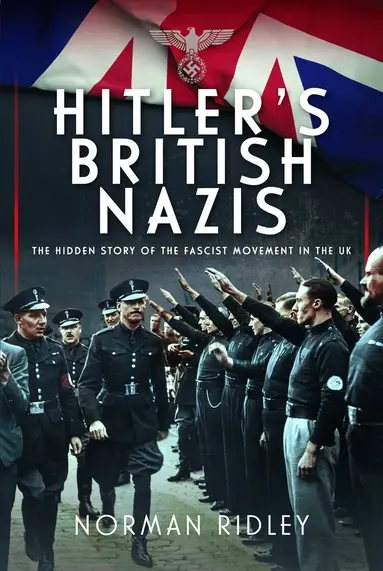
Hitler's British Nazis
Norman Ridley
Från 79 kr
Upptäck liknande författare
Om du gillar Norman Ridley kommer du förmodligen att uppskatta även dessa författare inom historia & arkeologi.