Författare
Olushola Akinshipe
Olushola Akinshipe är en uppskattad författare inom Ekonomi och Ledarskap med totalt 1 bok tillgängliga på Bokkollen.
Bland verken finns Digital Twin Model for the Management of Indoor Environmental Quality in Developing Economies, som toppar listan över Olushola Akinshipes populäraste böcker. Verken spänner över ekonomi & ledarskap och tilltalar läsare som uppskattar genren.
På Bokkollen gör vi det enkelt att navigera i Olushola Akinshipes författarskap. Vår databas uppdateras ständigt med nya släpp och format, så oavsett om du söker efter en lättläst pocket för semestern, en lyxig inbunden presentutgåva eller en digital ljudbok för pendlingen, har vi rätt utgåva för dig.
Jämför snabbt och smidigt priser på alla böcker av Olushola Akinshipe hos Sveriges ledande bokhandlare – som Adlibris, Bokus och Akademibokhandeln – och hitta alltid det bästa erbjudandet utan att betala för mycket.
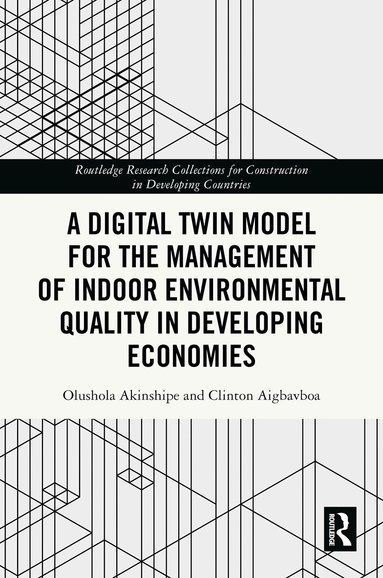
Digital Twin Model for the Management of Indoor Environmental Quality in Developing Economies
This book presents Digital Twin (DT) in clear and accessible terms, showing how it can be used to improve indoor spaces such as homes, offices, and other occupied environments. It explains how DT can support healthier, more comfortable, and more energy-efficient indoor conditions through intelligent monitoring, analysis, and control. The book provides a practical, step-by-step guide to developing and using DT systems to manage key indoor environmental factors, including air quality, temperature, lighting, and related conditions that affect human well-being and building performance. It also addresses common challenges associated with adopting this technology and offers practical ways to overcome them. A unique strength of this book is that it conceptualises and develops a holistic framework for implementing DT for indoor environmental quality (IEQ) management, tailored specifically to the contextual realities of developing countries. By doing so, the book moves beyond general discussion and offers a relevant and actionable pathway for application. It equips academics, professionals, decision-makers, and interested readers with the knowledge needed to adopt and benefit from DT technology in IEQ management.
Hela bibliografin
Utforska alla Olushola Akinshipes publicerade verk sorterade efter popularitet.
Upptäck liknande författare
Om du gillar Olushola Akinshipe kommer du förmodligen att uppskatta även dessa författare inom ekonomi & ledarskap.