Författare
Paul J. Frick
Paul J. Frick är en uppskattad författare inom Samhälle och politik med totalt 1 bok tillgängliga på Bokkollen.
Bland verken finns Clinical Guide to Working with Youth with Conduct Disorders and Limited Prosocial Emotions, som toppar listan över Paul J. Fricks populäraste böcker. Verken spänner över samhälle & politik och tilltalar läsare som uppskattar genren.
På Bokkollen gör vi det enkelt att navigera i Paul J. Fricks författarskap. Vår databas uppdateras ständigt med nya släpp och format, så oavsett om du söker efter en lättläst pocket för semestern, en lyxig inbunden presentutgåva eller en digital ljudbok för pendlingen, har vi rätt utgåva för dig.
Jämför snabbt och smidigt priser på alla böcker av Paul J. Frick hos Sveriges ledande bokhandlare – som Adlibris, Bokus och Akademibokhandeln – och hitta alltid det bästa erbjudandet utan att betala för mycket.
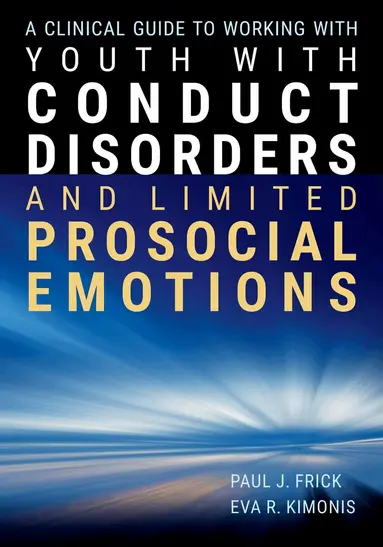
Clinical Guide to Working with Youth with Conduct Disorders and Limited Prosocial Emotions
This practical guide provides clinicians with evidence-based tools and strategies to assess and treat children and adolescents with serious behavior problems who exhibit limited prosocial emotions (LPEs).Extreme behavior problems in youth, while rare overall, have an outsized impact. These youth can cause tremendous harm to themselves, their peers, and even adults while also presenting as callous, unemotional, unremorseful, and unconcerned about the consequences of their actions. Without intervention, these children face increased risks of justice system involvement, school dropout, and serious mental health issues such as depression, suicidal ideation, and substance abuse that can continue into adulthood. Youth with serious conduct problems pose distinct challenges for mental health professionals, particularly when accompanied by LPEs. To support clinicians, the authors offer a comprehensive framework for engaging families, conducting specialized assessments, and delivering targeted treatment. Readers will learn how to use tools such as the Inventory of Callous-Unemotional Traits and the Clinical Assessment of Prosocial Emotions to evaluate the presence of LPE specifier, as defined by the DSM and the ICD. The book also presents multiple promising treatment methods, with a particular focus on an adapted version of parent-child interaction therapy (PCIT) designed specifically for young children with callous-unemotional traits. A detailed case example follows a 5-year-old Aboriginal boy and his mother, illustrating the full course of assessment, parent engagement, and intervention in the treatment of severe conduct problems with limited prosocial emotions.
Hela bibliografin
Utforska alla Paul J. Fricks publicerade verk sorterade efter popularitet.
Upptäck liknande författare
Om du gillar Paul J. Frick kommer du förmodligen att uppskatta även dessa författare inom samhälle & politik.