Författare
Robin Dunbar
Robin Dunbar är en uppskattad författare inom Psykologi och pedagogik och Kultur med totalt 11 böcker tillgängliga på Bokkollen, utgivna hos Fri Tanke, Faber & Faber, Penguin Books Ltd.
Bland verken finns Om religionernas uppkomst, som toppar listan över Robin Dunbars populäraste böcker. Verken spänner över filosofi & religion och tilltalar läsare som uppskattar genren.
Det senast publicerade verket av Robin Dunbar är Ikonoklasm : förkastandet av det förflutna, utgivet 2024.
Letar du efter något nytt att läsa? Prova Evolution – ett annat uppskattat verk av Robin Dunbar.
På Bokkollen gör vi det enkelt att navigera i Robin Dunbars författarskap. Vår databas uppdateras ständigt med nya släpp och format, så oavsett om du söker efter en lättläst pocket för semestern, en lyxig inbunden presentutgåva eller en digital ljudbok för pendlingen, har vi rätt utgåva för dig.
Jämför snabbt och smidigt priser på alla böcker av Robin Dunbar hos Sveriges ledande bokhandlare – som Adlibris, Bokus och Akademibokhandeln – och hitta alltid det bästa erbjudandet utan att betala för mycket.
Om religionernas uppkomst
Under hela vår historia har religiös tro varit en del av den mänskliga tillvaron - från de förhistoriska människornas grottmålningar till andlighetens fortlevnad i dagens alltmer sekulära samhällen. Faktum är att religion tycks vara nära förbundet med människans evolution.I Om religionernas uppkomst argumenterar evolutionspsykologen Robin Dunbar för att religion varken är en nyck eller en avvikelse i en annars effektiv evolutionär resa. Snarare kan religiositet och andliga upplevelser utgöra en fördel, både för individens hälsa och välstånd och för bräckliga samhällens möjligheter till sammanhållning. Utifrån banbrytande forskning och fältarbete inom arkeologi, historia, neurovetenskap och evolutionspsykologi formulerar Robin Dunbar en nytänkande teori om hur religionerna uppkom - och varför de överlever.
Hela bibliografin
Utforska alla Robin Dunbars publicerade verk sorterade efter popularitet.
Om religionernas uppkomst
Robin Dunbar
Från 295 kr
Science of Love and Betrayal
Robin Dunbar
Från 138 kr
How Religion Evolved
Robin Dunbar
Från 122 kr
Ikonoklasm : förkastandet av det förflutna
Robin Dunbar
Från 309 kr
Historien om människan : nya tankar om mänsklighetens tillblivelse
Robin Dunbar
Från 189 kr
Friends
Robin Dunbar
Från 176 kr
Evolution
Robin Dunbar
Från 118 kr
Iconoclasm
Robin Dunbar
Från 266 kr
Evolutionary Psychology
Robin Dunbar
Från 114 kr
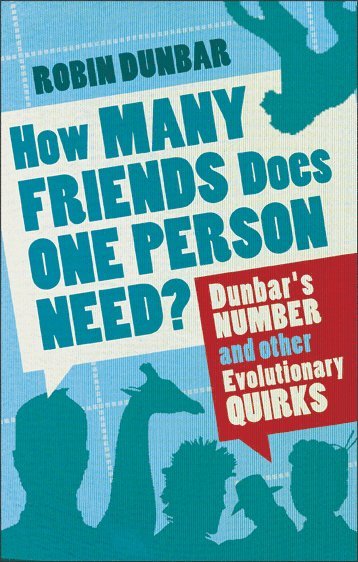
How Many Friends Does One Person Need?
Robin Dunbar
Från 179 kr
Human Story
Robin Dunbar
Från 189 kr
Upptäck liknande författare
Om du gillar Robin Dunbar kommer du förmodligen att uppskatta även dessa författare inom filosofi & religion.