Författare
Set Lonnert
Set Lonnert är en uppskattad författare inom Filosofi och religion och Data och IT med totalt 8 böcker tillgängliga på Bokkollen.
Bland verken finns The Conditions of Intelligence : Artificial Minds, Human Questions, som toppar listan över Set Lonnerts populäraste böcker. Verken spänner över filosofi & religion och tilltalar läsare som uppskattar genren.
Letar du efter något nytt att läsa? Prova Saying what you mean : a manual for contested words – ett annat uppskattat verk av Set Lonnert.
På Bokkollen gör vi det enkelt att navigera i Set Lonnerts författarskap. Vår databas uppdateras ständigt med nya släpp och format, så oavsett om du söker efter en lättläst pocket för semestern, en lyxig inbunden presentutgåva eller en digital ljudbok för pendlingen, har vi rätt utgåva för dig.
Jämför snabbt och smidigt priser på alla böcker av Set Lonnert hos Sveriges ledande bokhandlare – som Adlibris, Bokus och Akademibokhandeln – och hitta alltid det bästa erbjudandet utan att betala för mycket.
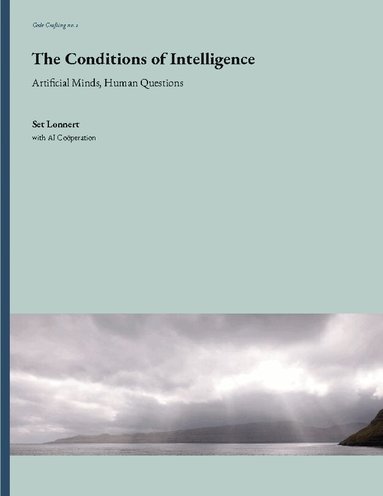
The Conditions of Intelligence : Artificial Minds, Human Questions
The Conditions of Intelligence traces artificial intelligence from its technical foundations to its philosophical, cultural, and political consequences. Beginning with the optimisation paradigm that drives modern AI, and its theoretical limits, the book asks what intelligence actually is, and what current systems demonstrably are not. The argument moves through four registers: the genuine capabilities and documented failure modes of large language models; the philosophical obstacles to alignment, among them value pluralism, Arrow's impossibility, and the hard problem of consciousness; the practical techniques that address part of those obstacles but not all; and the broader conditions, historical, cultural, geopolitical, in which AI development is taking place. Drawing on thinkers from Isaiah Berlin and Hannah Arendt to Cajal, Chollet, and Quine, and examining traditions from Shinto ethics to Ubuntu philosophy, the book insists that AI is not only a technical problem. It is a question about what kind of intelligence we are building, for whom, under whose governance, and at what cost to labour, to the epistemic commons, and to the physical world. The answer is not yet known. The question is urgent.
Hela bibliografin
Utforska alla Set Lonnerts publicerade verk sorterade efter popularitet.
The Conditions of Intelligence : Artificial Minds, Human Questions
Set Lonnert
Från 209 kr

The worldless machine : language, labor, and the conditions that produced AI
Set Lonnert
Från 169 kr
The Conditions of Intelligence : Artificial Minds, Human Questions
Set Lonnert
Från 219 kr

From code to computation : a modern guide programming and theory
Set Lonnert
Från 429 kr
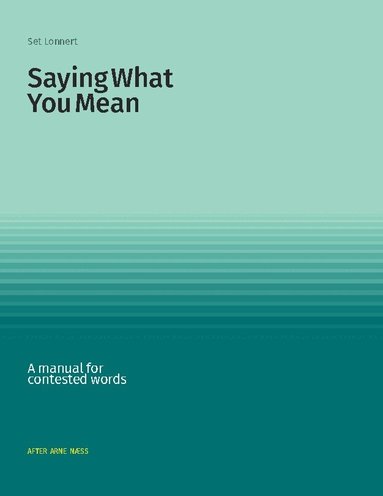
Saying what you mean : a manual for contested words
Set Lonnert
Från 149 kr

Att säga vad man menar : en handbok för omstridda ord
Set Lonnert
Från 189 kr
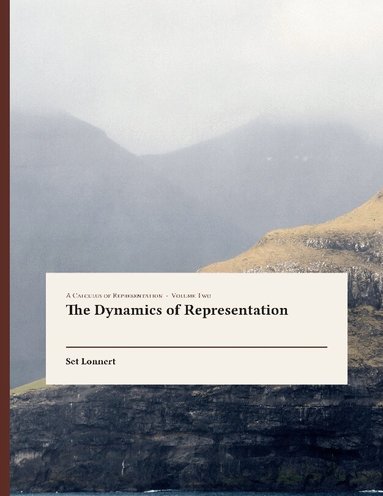
The Dynamics of Representation
Set Lonnert
Från 259 kr

The Peopled Record
Set Lonnert
Från 129 kr
Upptäck liknande författare
Om du gillar Set Lonnert kommer du förmodligen att uppskatta även dessa författare inom filosofi & religion.