Författare
Seth Dornisch
Seth Dornisch är en uppskattad författare inom Samhälle och politik med totalt 2 böcker tillgängliga på Bokkollen.
Bland verken finns Evolutionary Explanations for Associations between Religiosity and Mental Health, som toppar listan över Seth Dornischs populäraste böcker. Verken spänner över samhälle & politik och tilltalar läsare som uppskattar genren.
Letar du efter något nytt att läsa? Prova Evolutionary Explanations for Associations between Religiosity and Mental Health – ett annat uppskattat verk av Seth Dornisch.
På Bokkollen gör vi det enkelt att navigera i Seth Dornischs författarskap. Vår databas uppdateras ständigt med nya släpp och format, så oavsett om du söker efter en lättläst pocket för semestern, en lyxig inbunden presentutgåva eller en digital ljudbok för pendlingen, har vi rätt utgåva för dig.
Jämför snabbt och smidigt priser på alla böcker av Seth Dornisch hos Sveriges ledande bokhandlare – som Adlibris, Bokus och Akademibokhandeln – och hitta alltid det bästa erbjudandet utan att betala för mycket.
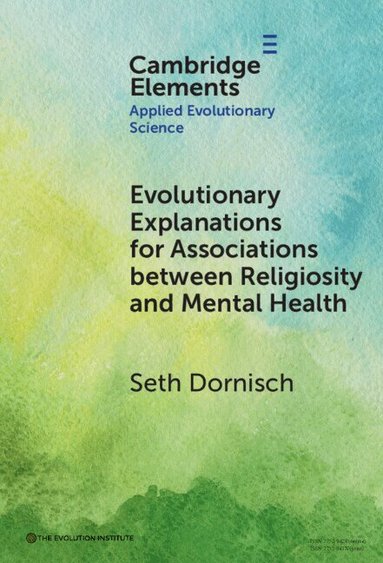
Evolutionary Explanations for Associations between Religiosity and Mental Health
This Element examines the relationship between mental health and religiosity from an evolutionary perspective. Drawing on psychology, anthropology, and health science, it explores the origins of religiosity and the cultural evolution of religious traditions to identify how religious beliefs, behaviors, and affiliations have influenced human psychosocial functioning over time. First, it defines the concepts of mental health and religiosity and then summarizes research on contemporary associations between them. This synthesis highlights the multidimensionality of each construct and the variability in their association across individuals and cultural contexts. Building on theory, the Element introduces a novel multilevel framework to explain how religiosity and mental health have interacted differently across evolutionary, cultural, and personal timescales. It concludes by considering applications of this evolutionary science, proposing that individuals who understand how religiosity and mental health are associated can more intentionally cultivate personal forms of religiosity that benefit, rather than hinder, well-being.
Hela bibliografin
Utforska alla Seth Dornischs publicerade verk sorterade efter popularitet.
Upptäck liknande författare
Om du gillar Seth Dornisch kommer du förmodligen att uppskatta även dessa författare inom samhälle & politik.