Författare
Simon Lindgren
Simon Lindgren är en uppskattad författare inom Samhälle och politik och Data och IT med totalt 9 böcker tillgängliga på Bokkollen, utgivna hos John Wiley and Sons Ltd, Liber, Studentlitteratur AB.
Bland verken finns Digital Media and Society, som toppar listan över Simon Lindgrens populäraste böcker. Verken spänner över samhälle & politik och tilltalar läsare som uppskattar genren.
Det senast publicerade verket av Simon Lindgren är Digital Media and Society, utgivet 2025.
Letar du efter något nytt att läsa? Prova Researching Digital Media and Society – ett annat uppskattat verk av Simon Lindgren.
På Bokkollen gör vi det enkelt att navigera i Simon Lindgrens författarskap. Vår databas uppdateras ständigt med nya släpp och format, så oavsett om du söker efter en lättläst pocket för semestern, en lyxig inbunden presentutgåva eller en digital ljudbok för pendlingen, har vi rätt utgåva för dig.
Jämför snabbt och smidigt priser på alla böcker av Simon Lindgren hos Sveriges ledande bokhandlare – som Adlibris, Bokus och Akademibokhandeln – och hitta alltid det bästa erbjudandet utan att betala för mycket.
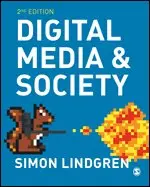
Digital Media and Society
What does it mean to live in a digital society? Does social media empower political activism? How do we form and express our identity in a digital age? Do algorithms and search engine results have a social role? How have software and hardware transformed how we interact with each other? In the early 21st century, digital media and the social have become irreversibly intertwined. In this cutting-edge introduction, Simon Lindgren explores what it means to live in a digital society. With succinct explanations of the key concepts, debates and theories you need to know, this is a must-have resource for students exploring digital media, social media, media and society, data and society, and the internet. "An engaging story of the meaning digital media have in societies. The writing is relatable, with diverse and comprehensive references to theories. Above all, this is a fun book on what a contemporary digital society looks like!" - Professor Zizi Papacharissi, University of Illinois at Chicago Simon Lindgren is Professor of Sociology at Umeå University in Sweden. He is also the director of DIGSUM, an interdisciplinary academic research centre studying the social dimensions of digital technology.
Hela bibliografin
Utforska alla Simon Lindgrens publicerade verk sorterade efter popularitet.
Digital Media and Society
Simon Lindgren
Från 413 kr
Critical Theory of AI
Simon Lindgren
Från 223 kr
Populärkultur
Simon Lindgren
Från 473 kr
AI : ett kritiskt perspektiv
Simon Lindgren
Från 367 kr
Researching Digital Media and Society
Simon Lindgren
Från 413 kr
Handbook of Critical Studies of Artificial Intelligence
Simon Lindgren
Från 5 331 kr
Data Theory
Simon Lindgren
Från 218 kr
Digital Media and Society
Simon Lindgren
Från 413 kr
Critical Theory of AI
Simon Lindgren
Från 673 kr
Upptäck liknande författare
Om du gillar Simon Lindgren kommer du förmodligen att uppskatta även dessa författare inom samhälle & politik.