Författare
Thierry Oppeneer
Thierry Oppeneer är en uppskattad författare inom Skönlitteratur med totalt 2 böcker tillgängliga på Bokkollen.
Bland verken finns Popular Political Participation from Archaic Greece to the Late Hellenistic Period, som toppar listan över Thierry Oppeneers populäraste böcker. Verken spänner över skönlitteratur och tilltalar läsare som uppskattar genren.
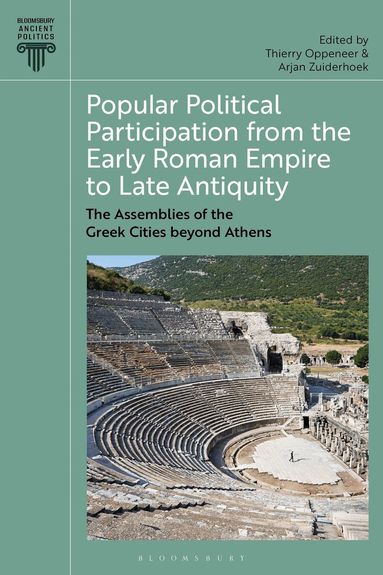
Letar du efter något nytt att läsa? Prova Popular Political Participation from the Early Roman Empire to Late Antiquity – ett annat uppskattat verk av Thierry Oppeneer.
På Bokkollen gör vi det enkelt att navigera i Thierry Oppeneers författarskap. Vår databas uppdateras ständigt med nya släpp och format, så oavsett om du söker efter en lättläst pocket för semestern, en lyxig inbunden presentutgåva eller en digital ljudbok för pendlingen, har vi rätt utgåva för dig.
Jämför snabbt och smidigt priser på alla böcker av Thierry Oppeneer hos Sveriges ledande bokhandlare – som Adlibris, Bokus och Akademibokhandeln – och hitta alltid det bästa erbjudandet utan att betala för mycket.
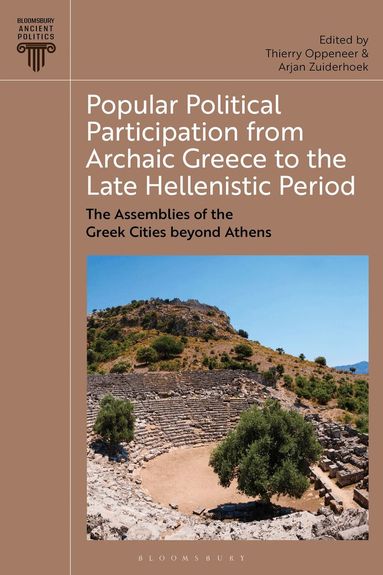
Popular Political Participation from Archaic Greece to the Late Hellenistic Period
This volume studies popular assemblies in Greek cities from Homeric to late Hellenistic times. Greek poleis were among the most politically inclusive societies in premodern history, primarily because via their public assemblies, most or all adult male citizens beyond the elite could participate in politics. In those cities the Greeks called democracies, the assembly even functioned as the chief decision-making institution. In this volume, an international team of experts explores assemblies in Greek cities mostly beyond the already well-studied case of Classical Athens, focussing on topics like the origins of assembly politics in Homeric communities, the size of assemblies, assemblies in Classical oligarchic poleis, assemblies in Hellenistic cities (traditionally viewed as no longer fully democratic), and the comparative study of Greek assemblies and participatory institutions in other societies.A companion volume (Popular Political Participation from the Early Roman Empire to Late Antiquity: The Assemblies of the Greek Cities beyond Athens Volume II) explores assemblies in Greek cities under Rome until the late third century CE. Throughout both volumes, the emphasis is on the notion that assemblies were an essential contributing factor to the surprising institutional success and longevity of the Greek city. Together they suggest that the assembly ought to be a key component of any explanation for the remarkable resilience of the polis as a system of government through more than a millennium of ancient history.
Hela bibliografin
Utforska alla Thierry Oppeneers publicerade verk sorterade efter popularitet.
Upptäck liknande författare
Om du gillar Thierry Oppeneer kommer du förmodligen att uppskatta även dessa författare inom skönlitteratur.
Boktips inom skönlitteratur
Vårens gåtfulla läsning: Dan Browns nya thriller
Upptäck Dan Browns senaste thriller, en gåtfull vårsaga fylld av hemligheter och snabba vändningar.
Påskläsning – Liken vi begravde, en gåtfull berättelse
Upptäck den gåtfulla skönlitteraturen i Liken vi begravde – en påskläsning om död, minne och försoning som berör djupt.
Mörka aprilkvällar blir heta med Hembiträdets hemlighet
När aprilregnet smattrar mot rutan blir Hembiträdets hemlighet en het, gåtfull följeslagare som håller dig vaken hela natten.
Mellan blomsterdoft och stjärnljus – en vårbok
Upptäck Malin Haawinds poetiska debut där vårens blommor möter natthimlens klarhet. En bok som glimmar av hopp och stjärnljus.