Författare
T.P. Wiseman
T.P. Wiseman är en uppskattad författare inom Skönlitteratur och Biografier med totalt 2 böcker tillgängliga på Bokkollen, utgivna hos Princeton University Press.
Bland verken finns House of Augustus, som toppar listan över T.P. Wisemans populäraste böcker. Verken spänner över skönlitteratur och tilltalar läsare som uppskattar genren.
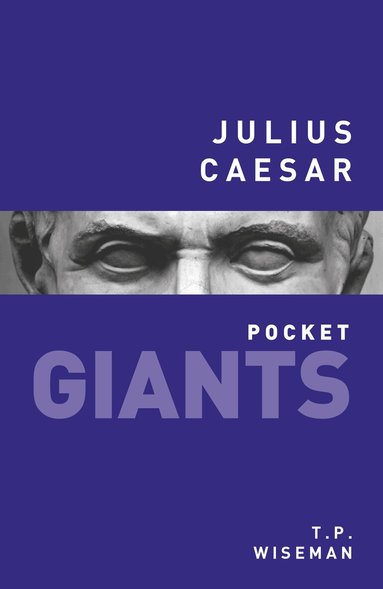
Letar du efter något nytt att läsa? Prova Julius Caesar: pocket GIANTS – ett annat uppskattat verk av T.P. Wiseman.
På Bokkollen gör vi det enkelt att navigera i T.P. Wisemans författarskap. Vår databas uppdateras ständigt med nya släpp och format, så oavsett om du söker efter en lättläst pocket för semestern, en lyxig inbunden presentutgåva eller en digital ljudbok för pendlingen, har vi rätt utgåva för dig.
Jämför snabbt och smidigt priser på alla böcker av T.P. Wiseman hos Sveriges ledande bokhandlare – som Adlibris, Bokus och Akademibokhandeln – och hitta alltid det bästa erbjudandet utan att betala för mycket.
House of Augustus
A radical reexamination of the textual and archaeological evidence about Augustus and the PalatineCaesar Augustus (63 BC-AD 14), who is usually thought of as the first Roman emperor, lived on the Palatine Hill, the place from which the word "palace" originates. A startling reassessment of textual and archaeological evidence, The House of Augustus demonstrates that Augustus was never an emperor in any meaningful sense of the word, that he never had a palace, and that the so-called "Casa di Augusto" excavated on the Palatine was a lavish aristocratic house destroyed by the young Caesar in order to build the temple of Apollo. Exploring the Palatine from its first occupation to the present, T. P. Wiseman proposes a reexamination of the "Augustan Age," including much of its literature.Wiseman shows how the political and ideological background of Augustus' rise to power offers a radically different interpretation of the ancient evidence about the Augustan Palatine. Taking a long historical perspective in order to better understand the topography, Wiseman considers the legendary stories of Rome's origins-in particular Romulus' foundation and inauguration of the city on the summit of the Palatine. He examines the new temple of Apollo and the piazza it overlooked, as well as the portico around it with its library used as a hall for Senate meetings, and he illustrates how Commander Caesar, who became Caesar Augustus, was the champion of the Roman people against an oppressive oligarchy corrupting the Republic.A decisive intervention in a critical debate among ancient historians and archaeologists, The House of Augustus recalibrates our views of a crucially important period and a revered public space.
Hela bibliografin
Utforska alla T.P. Wisemans publicerade verk sorterade efter popularitet.
Upptäck liknande författare
Om du gillar T.P. Wiseman kommer du förmodligen att uppskatta även dessa författare inom skönlitteratur.
Boktips inom skönlitteratur
Vårens gåtfulla läsning: Dan Browns nya thriller
Upptäck Dan Browns senaste thriller, en gåtfull vårsaga fylld av hemligheter och snabba vändningar.
Påskläsning – Liken vi begravde, en gåtfull berättelse
Upptäck den gåtfulla skönlitteraturen i Liken vi begravde – en påskläsning om död, minne och försoning som berör djupt.
Mörka aprilkvällar blir heta med Hembiträdets hemlighet
När aprilregnet smattrar mot rutan blir Hembiträdets hemlighet en het, gåtfull följeslagare som håller dig vaken hela natten.
Mellan blomsterdoft och stjärnljus – en vårbok
Upptäck Malin Haawinds poetiska debut där vårens blommor möter natthimlens klarhet. En bok som glimmar av hopp och stjärnljus.