Format
Inbunden
Sidor
352 sidor
Språk
Engelska
Utgiven
sep. 2017
Jämför priser
Från 331 kr331 kr

429 kr
449 kr
Priserna uppdateras löpande från säkra och trygga butiker.
Om boken
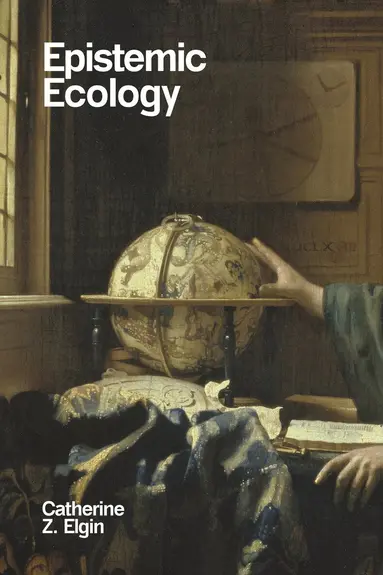
The development of an epistemology that explains how science and art embody and convey understanding.
Philosophy valorizes truth, holding that there can never be epistemically good reasons to accept a known falsehood, or to accept modes of justification that are not truth conducive. How can this stance account for the epistemic standing of science, which unabashedly relies on models, idealizations, and thought experiments that are known not to be true? In True Enough, Catherine Elgin argues that we should not assume that the inaccuracy of models and idealizations constitutes an inadequacy. To the contrary, their divergence from truth or representational accuracy fosters their epistemic functioning. When effective, models and idealizations are, Elgin contends, felicitous falsehoods that exemplify features of the phenomena they bear on. Because works of art deploy the same sorts of felicitous falsehoods, she argues, they also advance understanding.
Elgin develops a holistic epistemology that focuses on the understanding of broad ranges of phenomena rather than knowledge of individual facts. Epistemic acceptability, she maintains, is a matter not of truth-conduciveness, but of what would be reflectively endorsed by the members of an idealized epistemic community-a quasi-Kantian realm of epistemic ends.
Fler böcker av Catherine Z. Elgin
Liknande böcker
Alla i Filosofi och religionBästa pris331 kr
Gå till butik